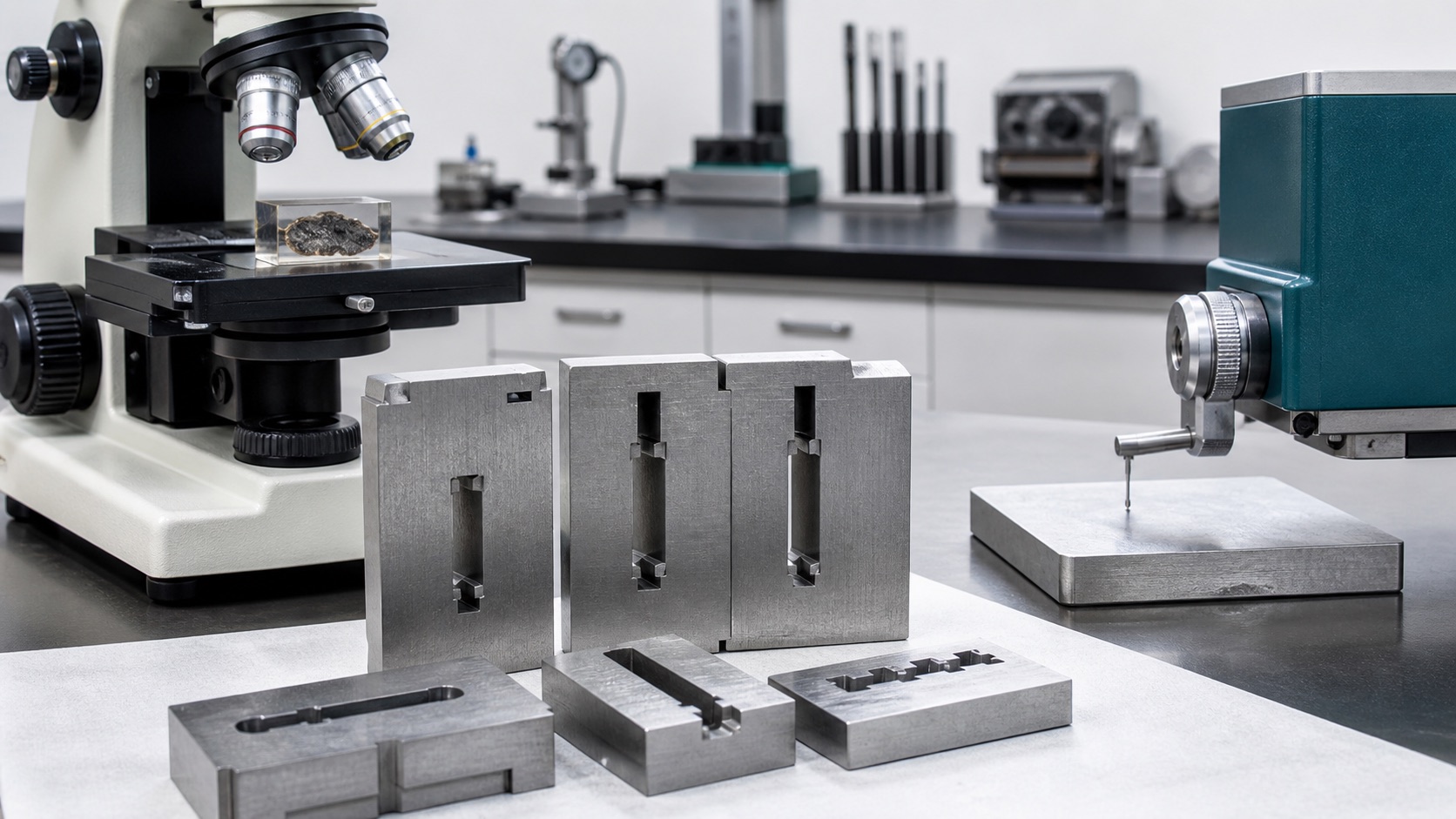
A connector die insert can pass its slot dimensions and still need further surface verification. Roughness, geometry and the thermally affected surface are different acceptance questions. Define each before quoting a critical wire EDM component.
Separate roughness from surface integrity
EDM removes material by electrical discharges; some melted material can solidify again at the surface. A roughness result describes texture, not the depth or condition of that layer. For an insert with thin teeth or a working edge, ask which surfaces need metallurgical assessment. Do not turn a visual shine or one Ra value into a claim of zero recast.
Specify the result, not a universal number of passes
Finishing discharges and skim passes can improve the cut surface, but their result depends on material, heat treatment, thickness, machine technology and flushing. A request for three cuts is not a complete quality specification. Quote the geometry, roughness, edge condition and any surface-layer limit separately. Machine-vendor demonstration figures are not a promise for another machine or part.
Plan polishing before final sizing
If the working surface needs polishing, grinding or another approved finishing operation, define which faces may lose material and how the profile will be checked afterward. Uncontrolled hand polishing can round a punch edge or change a narrow slot. For critical surface-layer acceptance, agree a representative coupon and a qualified laboratory method, such as prepared cross-section examination, before the trial is cut.
Use a clear release checklist
Provide steel grade, hardness, heat-treatment state, working-face markings and the final inspection drawing. Record the selected process, permitted edge break and finishing allowance. Vietlink Precision can review CNC and wire-cut tooling requirements; specialist metallurgical testing and its cost must be confirmed separately. Release the insert against the agreed evidence rather than assuming a particular number of skim cuts establishes tool life.