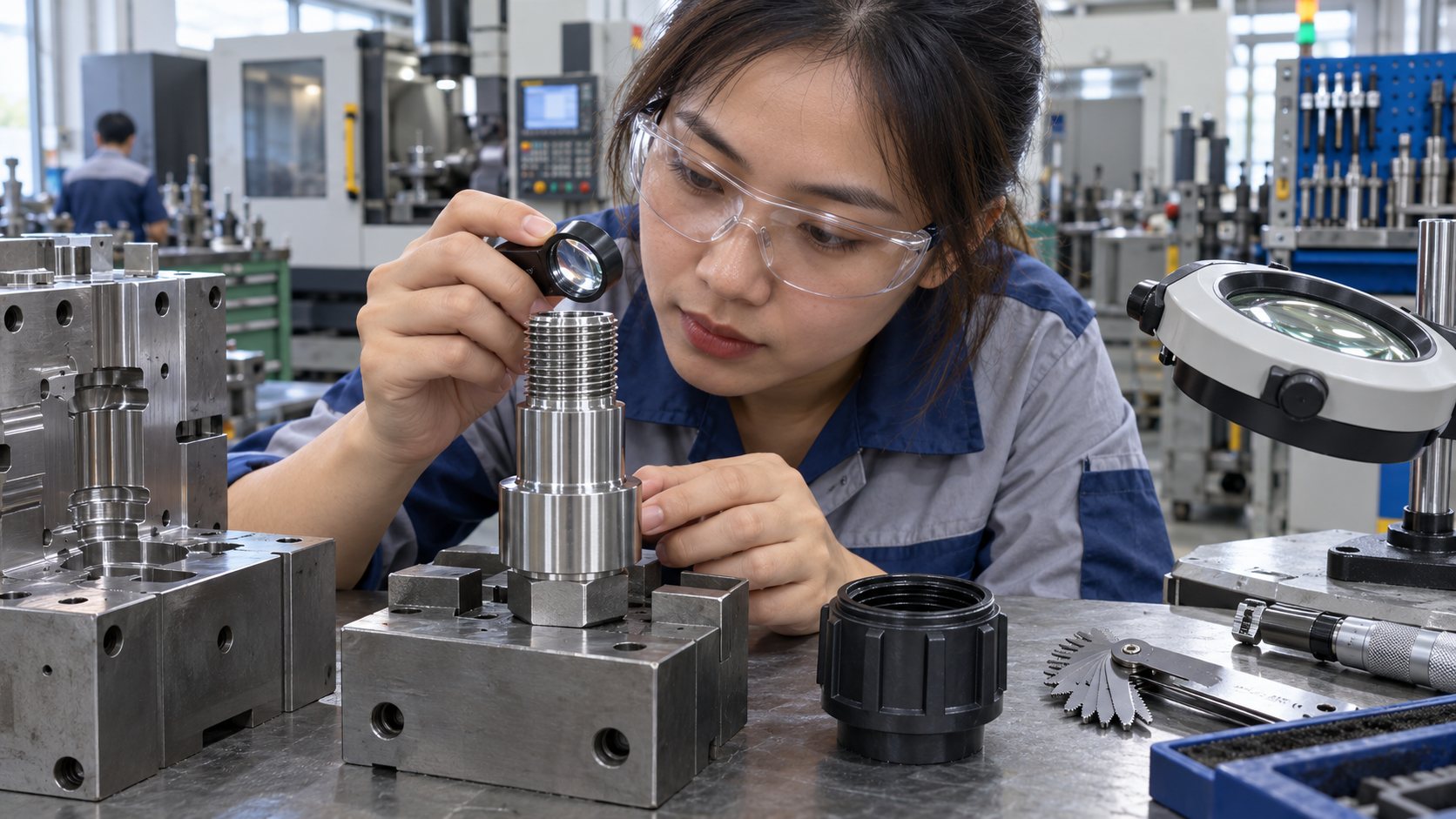
A steel threaded core is not simply a bolt made to the finished plastic thread drawing. The core forms the complementary geometry, with tool dimensions set by the approved shrinkage and release design. The molded cap and its mating part remain the functional acceptance reference.
Choose how the thread leaves the core
For a connector cap or threaded housing, decide between an approved hand-loaded insert, unscrewing mechanism or a suitable collapsible-core system before cutting steel. The choice depends on geometry, resin, production volume and available tooling space. Do not assume an internal thread can be stripped straight off a rigid core. Core manufacture and design of an automatic release mechanism are different scopes of supply.
Confirm the tool profile and its locating datums
Have the mold designer approve thread form, lead, starts, effective length, runout and shrinkage allowance. Relate the threaded area to its locating shank, shutoff face and drive feature. Plan rough machining, heat treatment and final turning, grinding or EDM according to the drawing. Preserve the thread crest, root and release edges when polishing; a glossy surface with a changed profile is not an acceptable substitute.
Inspect the core and the molded thread separately
Measure the tool with a method suited to its approved geometry, such as profile inspection or qualified thread measurement. A standard finished-part gauge may not match a shrinkage-compensated core. After molding, condition samples as specified and check the plastic thread with the agreed mating part or gauge. Record seating, assembly effort, release marks and damage over repeated samples. Review molding conditions before treating every fit problem as a machining defect.
Send the mating part and release interface for quotation
Provide product and core drawings, resin grade, approved tool dimensions, core material and treatment, drive interface, quantity and inspection requirements. Include the mating cap or connector and explain whether the core is manually handled or part of an existing release unit. Agree who owns shrinkage approval and molding trials. This separates a defined machined spare from a request to redesign the whole mold.