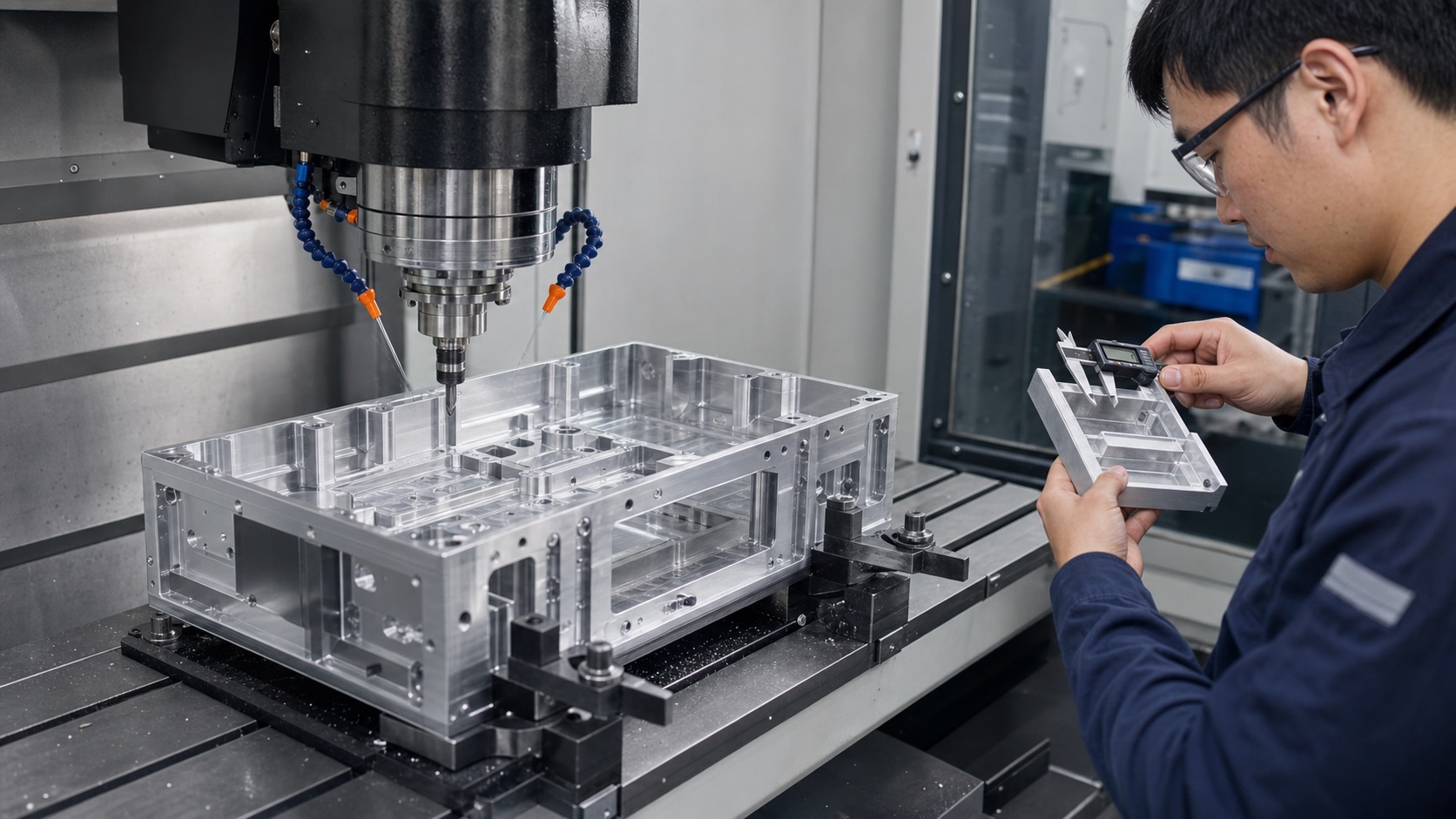
Thin-wall aluminum housings must stay light, clean and accurate when assembled into automation equipment. The main risk is not only outside size; clamping distortion, milling vibration, surface scratches and hole shift after finishing all matter.
Workholding controls stability
Thin walls can deform when clamping force is concentrated on one edge. Before machining, datum faces, safe clamping areas, force-sensitive areas and process sequence should be reviewed together.
Roughing and finishing should be separated
For housings with deep pockets or thin ribs, roughing should leave controlled stock and finishing should happen after the part becomes stable. Sharp tools, lighter toolpaths and heat control improve surface consistency.
Finish and mounting holes need early definition
If anodizing, painting or other surface treatment is required, threaded holes, mating faces and contact areas should be defined early. Some surfaces may need masking to preserve assembly dimensions.
How Vietlink Precision manages delivery
We support prototypes and low-volume batches with checks on mounting holes, datums, flatness and surface protection packaging. Buyers should share 2D drawings, 3D files, finish requirements and expected quantities.