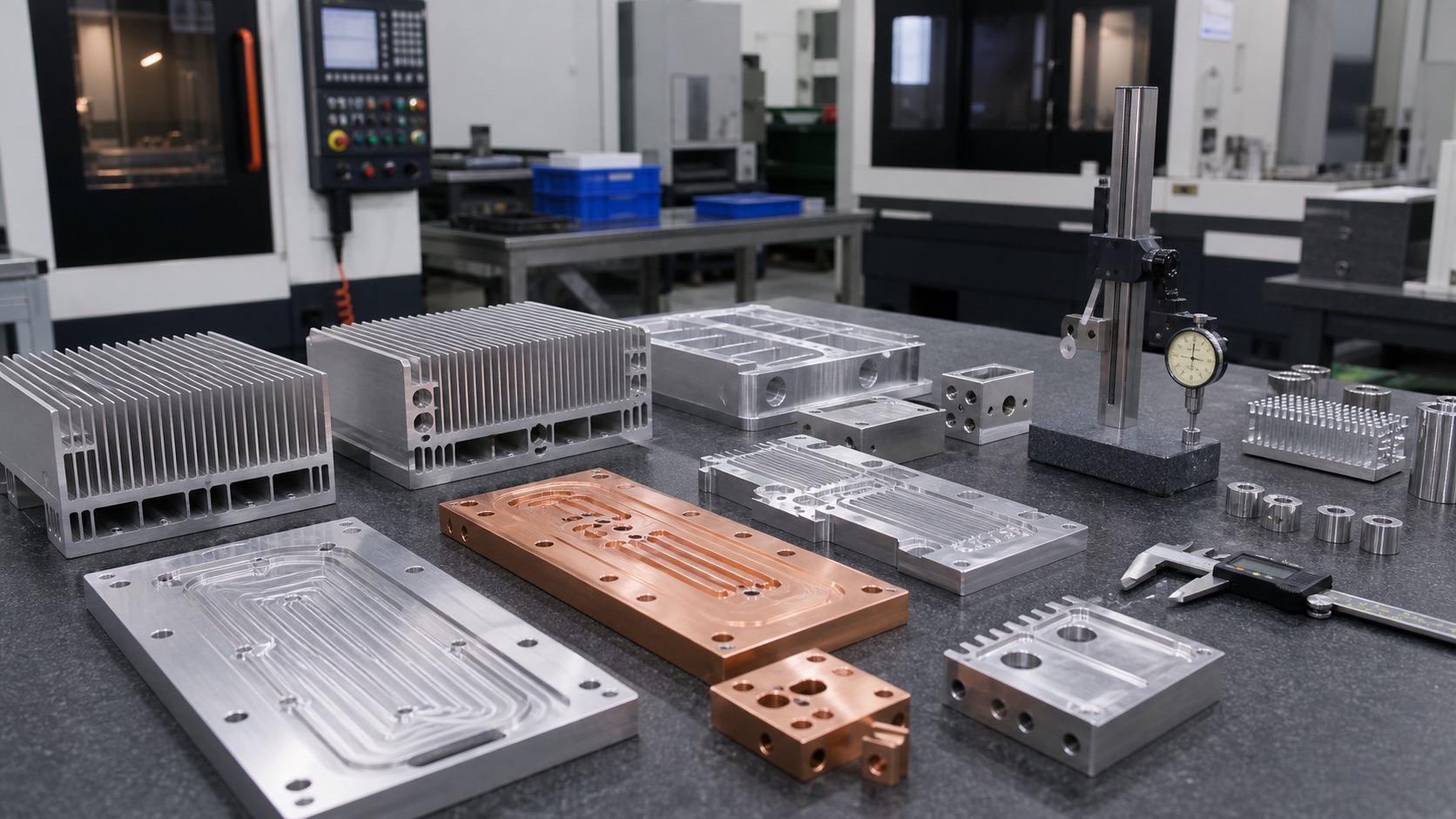
Thermal parts need more than correct external dimensions. Contact faces, cooling channels, burr control and material choice affect heat transfer and assembly reliability.
Thermal function drives machining priorities
Aluminum heat sinks, copper blocks, cooling plates and thermal spacers transfer heat through contact surfaces. Mounting faces, gasket faces and screw locations often matter more than non-functional appearance.
Choose material by conductivity and machinability
Aluminum is light and efficient for many heat sinks and plates. Copper conducts heat better, but burrs and deformation are harder to control. If plating or anodizing is required, contact areas must be defined early.
Fins, channels and sealing faces
Thin fins, deep grooves and cooling channels require suitable cutters, stable sequence and careful deburring. For cooling plates with sealing faces, flatness and surface roughness should match gasket or thermal adhesive requirements.
Inspection before electronics assembly
Check flatness, hole positions, burrs, contact surfaces and, when possible, fit with sample components. Drawings should mark heat-transfer faces, no-scratch zones and surface treatment requirements.