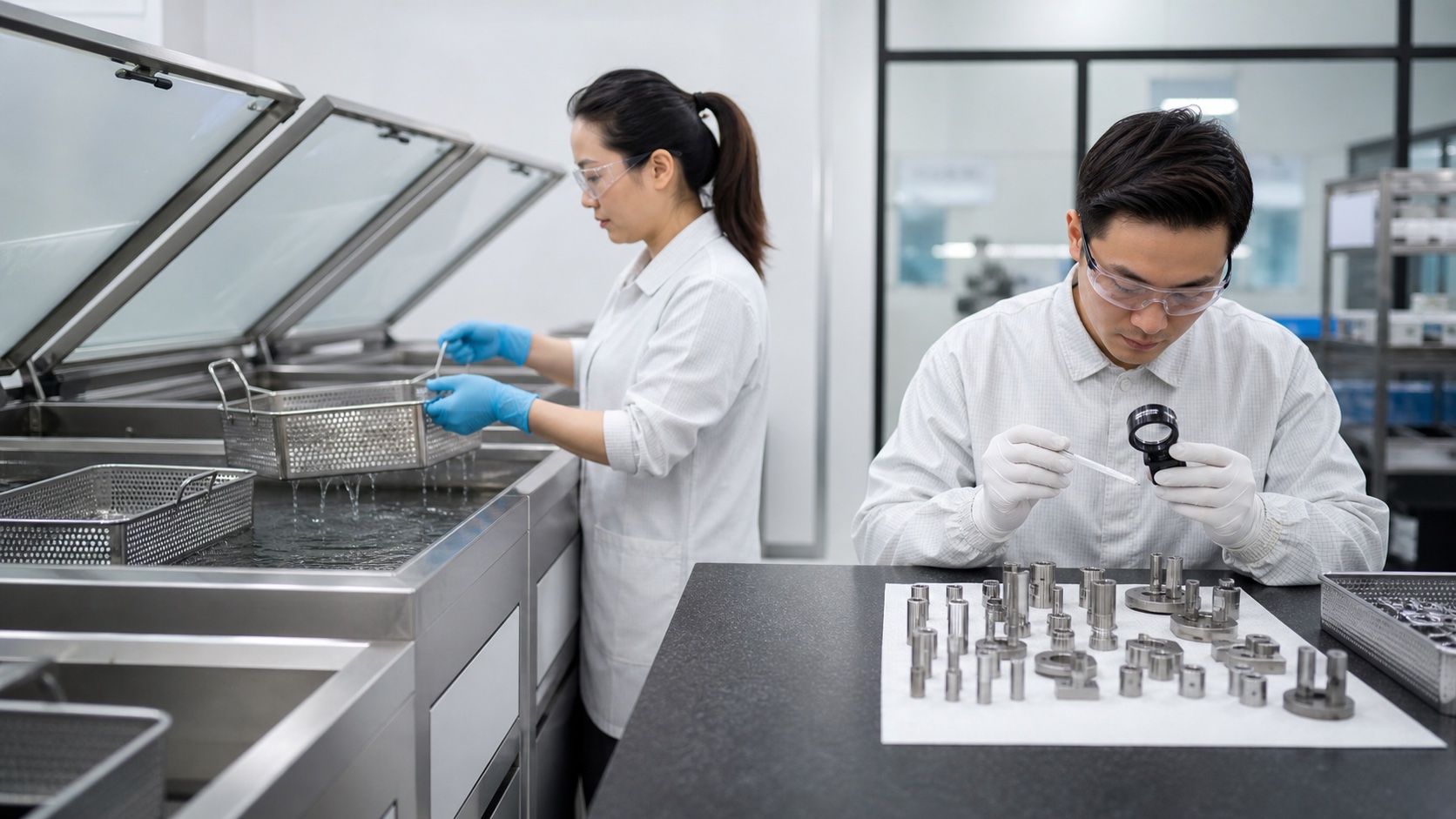
Stainless steel forms a protective film, but free iron, oil, grinding residue and machining contamination can cause early staining. Passivation works only after proper cleaning and cannot replace correct alloy selection.
Select the stainless grade first
304, 316 and hardenable stainless grades differ in corrosion resistance, hardness and magnetism. Environment, chemical exposure, wear and required hardness determine the alloy before finishing is selected.
Remove oil and free-iron contamination
Parts must be degreased, flushed and kept away from brushes or blast media used on carbon steel. Passivation treats a clean surface; it does not hide heat tint, pits or burrs.
Protect functional surfaces and dimensions
Threads, fits, slide faces and mating areas should remain clean and separated in baskets. Passivation normally does not build thickness like plating, but the process must still match the customer specification.
Rinse, dry and verify after treatment
Rinsing removes process chemistry, followed by suitable water quality and drying. Visual, cleanliness or corrosion tests are applied as specified, and clean packaging prevents recontamination.