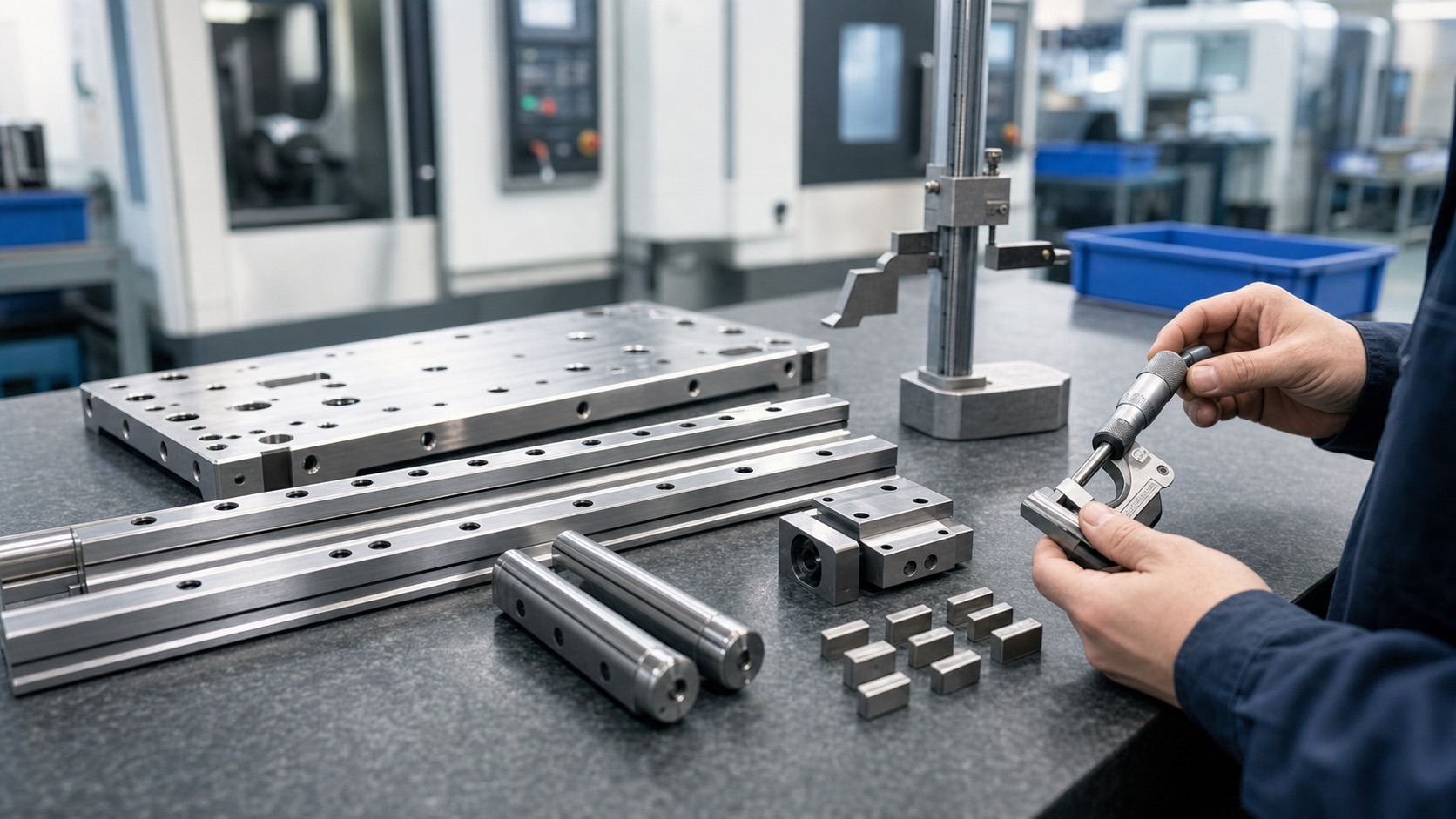
Guide rails, pins and wear blocks in connector automation equipment must handle repeated friction while keeping stable position. Buyers should define material, hardness, sliding surfaces and key inspection points early.
Choose stainless or hardened steel by working position
304 or 316 stainless is useful for corrosion resistance, while hardened or tool steel is better for high-wear locations. If a part needs both corrosion resistance and wear resistance, replaceable pins or inserts can be used at contact areas.
Straightness and parallelism matter more than appearance
Rails and blocks used in sliding mechanisms should be checked for straightness, parallelism, mounting height and hole position. A good-looking part can still jam a mechanism if datum faces are slightly off.
Sliding surfaces need protection during packing
Ground faces, sliding surfaces and working edges should not contact other parts during transport. Layer separation, edge protection and part codes help buyers install parts correctly.
How Vietlink Precision checks parts before delivery
We machine stainless rails, pins, wear blocks, plates and small automation parts with checks on datum faces, mounting holes, flatness and kit-based packaging.