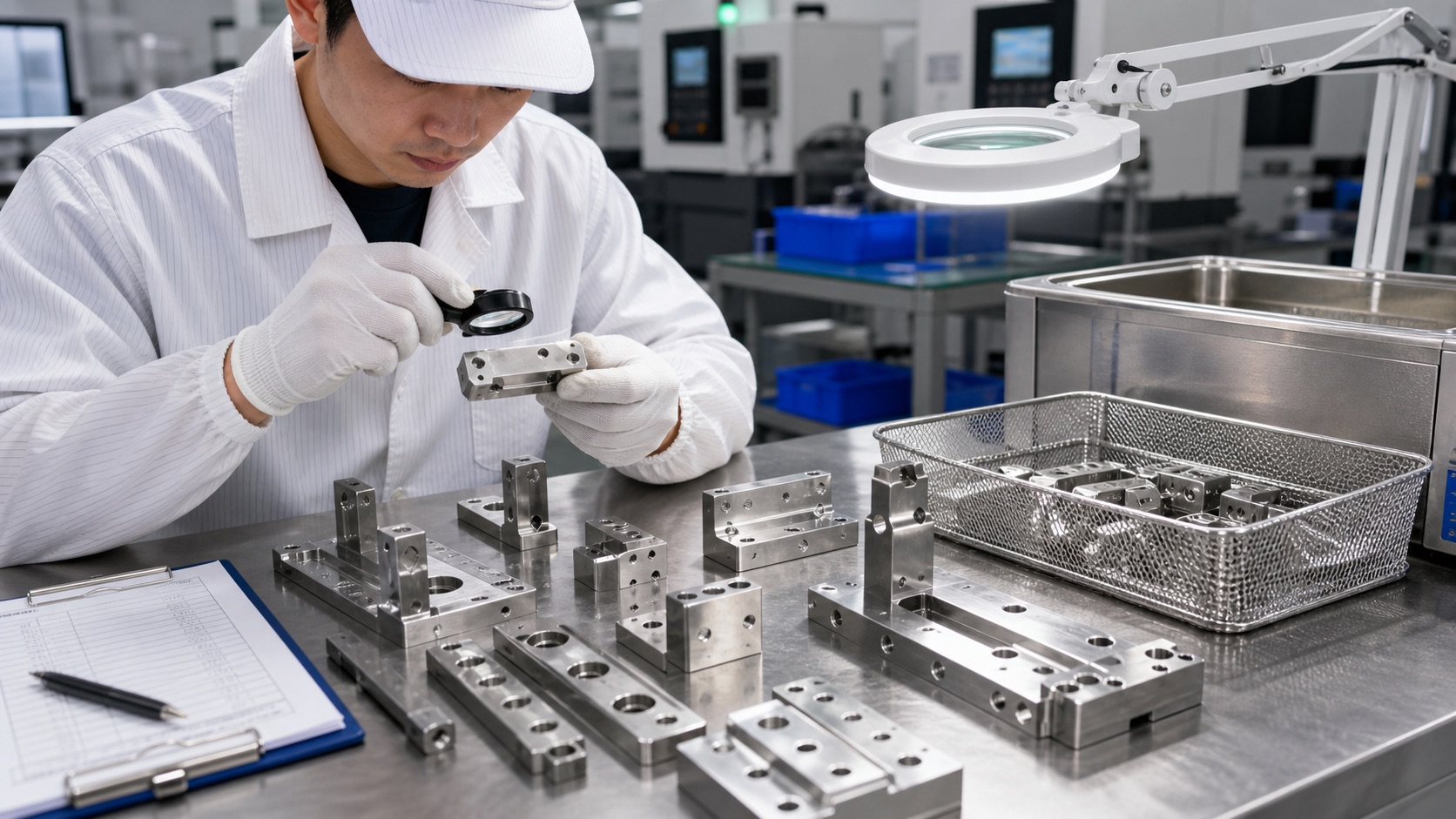
Stainless steel is strong and corrosion resistant, but harder to machine than aluminum. Burrs, cutting oil or sharp edges can create assembly and service problems.
Why stainless creates burrs
Stainless steel is tough and ductile, so small holes, narrow grooves and threads can retain burrs. Tool wear or unsuitable cutting parameters make it worse.
Areas to inspect
Assembly edges, hole entrances, threads, narrow slots, sliding faces and any area touched by operators or cables should be checked.
Cleaning and passivation
After deburring, parts may need ultrasonic cleaning, degreasing or passivation depending on the working environment. Functional surfaces should be protected.
Requirements to specify
Drawings should define burr-free zones, edge breaks, oil-free requirements and visual standards to avoid misunderstanding.