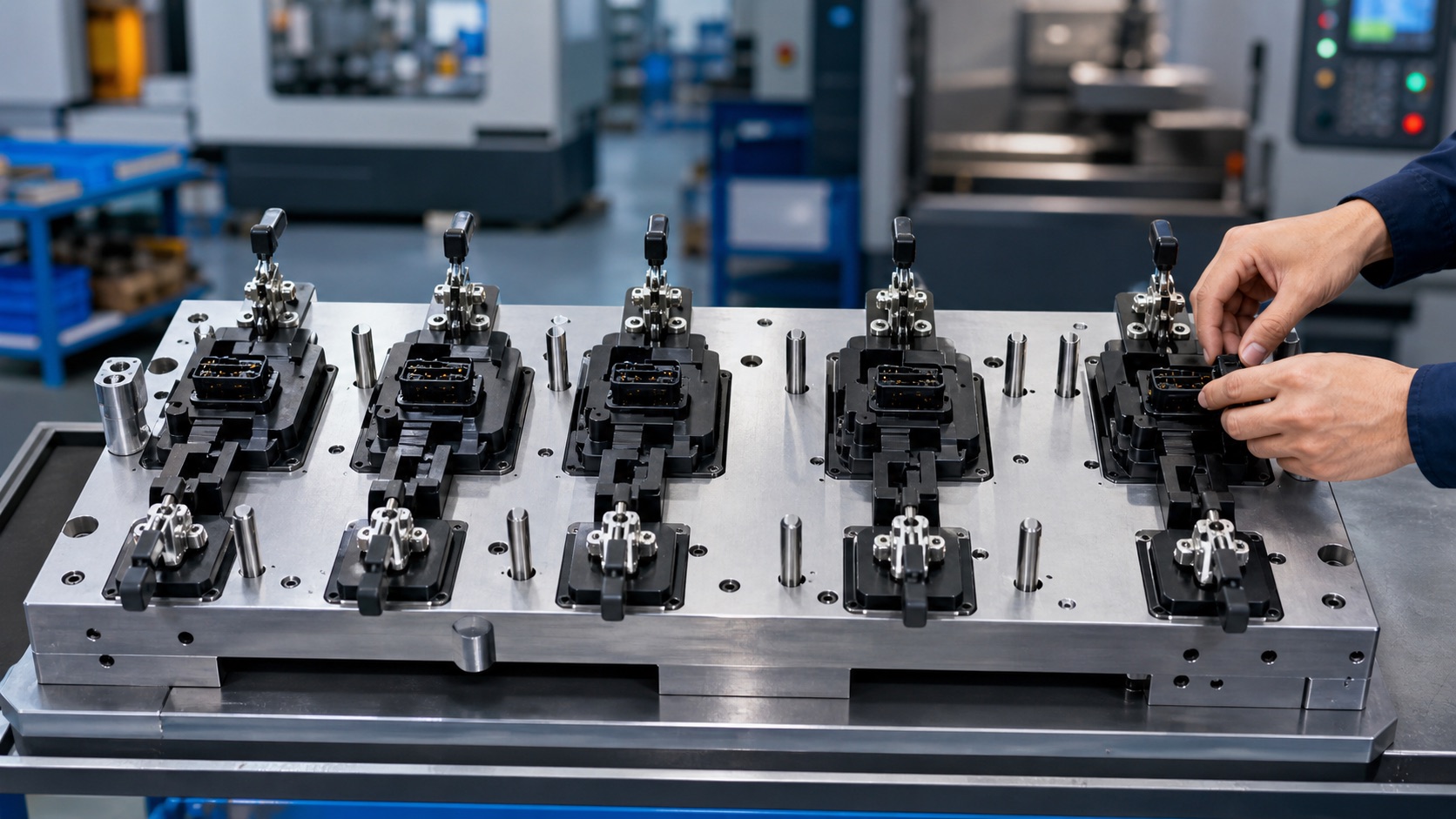
A fixture that works well in one station may not automatically scale to 8 or 16 stations. As the station count grows, small differences in datums, clamp height and operator loading are repeated many times and directly affect output.
Validate one station first
Before building a multi-station fixture, test one station with real parts. Confirm loading direction, clamp force, pin locations, part removal and potential mistake points. A stable single station makes the scaled design easier to control.
Repeat the same datum system
Each station should use the same datum logic: base surface, primary pin, secondary pin and stop face. If each station locates the part slightly differently, output will vary even when the fixture looks identical on paper.
Design for fast and error-proof loading
Station spacing must allow hands, grippers or small tools to move comfortably. Parts that can be loaded backwards should use asymmetric nests, clear stops or color-coded features to reduce mistakes during long shifts.
Inspect every station before delivery
Clamp height, pin position and station-to-station repeatability should be checked before the fixture is released. Numbered stations and inspection records make later maintenance easier for the production team.