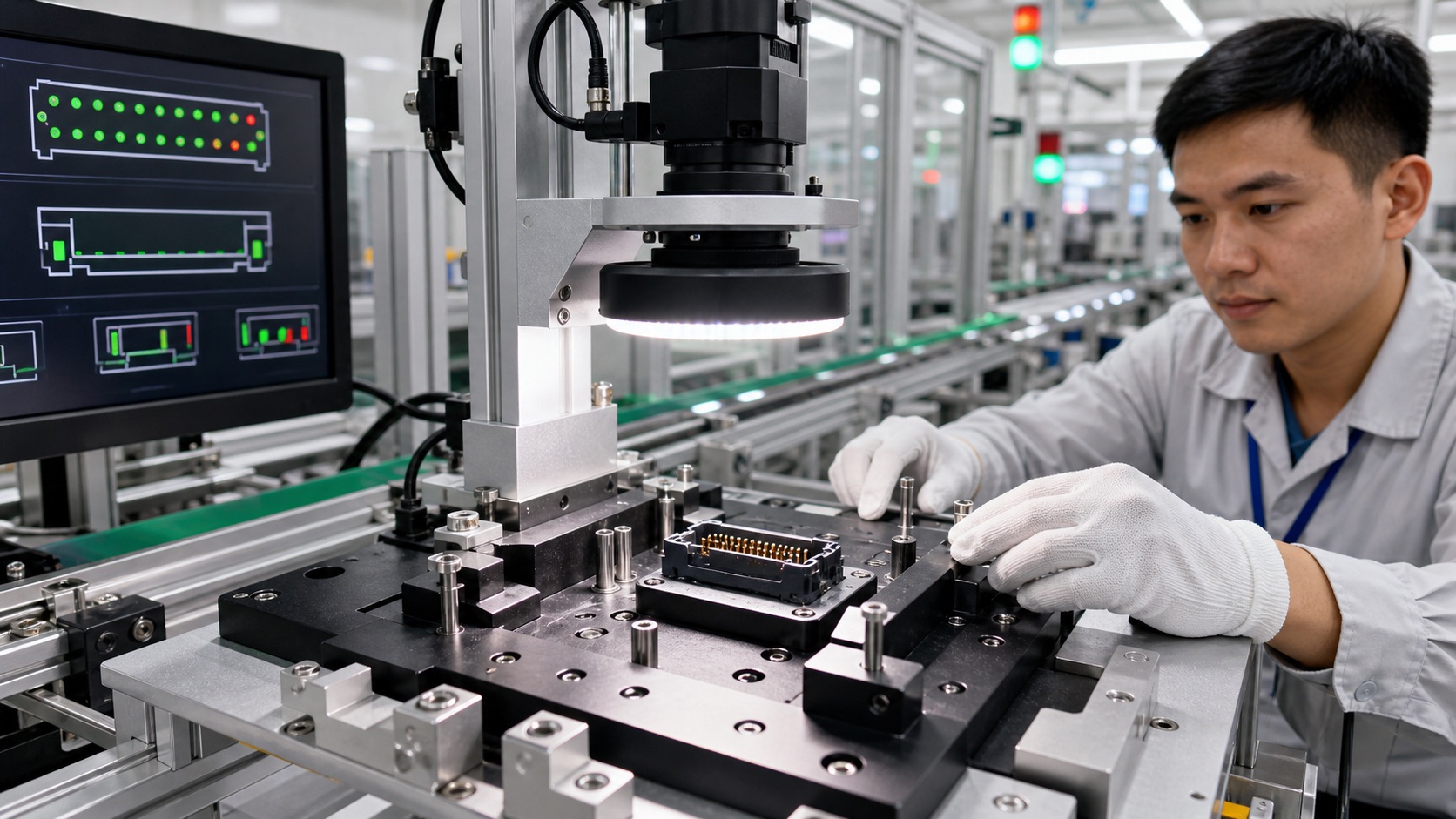
A capable camera cannot compensate for inconsistent part placement or changing light. A stable system needs repeatable nesting, controlled illumination, defined boundary samples and verification after maintenance.
Define defects before selecting the camera
Missing pins, bent pins, reversed orientation, height errors and housing offset can require different viewing angles, resolution and lighting. The defect list and smallest feature are more useful than choosing by megapixels alone.
Locate repeatedly without damaging the connector
Rest pads, stops and clamps should return the housing to one position without loading the terminals. Replaceable inserts need clear datums and mistake-proof installation.
Lock lighting conditions and reference samples
Ring, back or diffuse lighting is selected for plastic and metal reflectivity. Good samples, boundary defects and reference images support revalidation after a camera, light or nest change.
Plan maintenance and traceability
Camera windows, lights, nests and sensors should be easy to clean. Storing program ID, insert revision, results and defect images helps diagnose changes in the process.