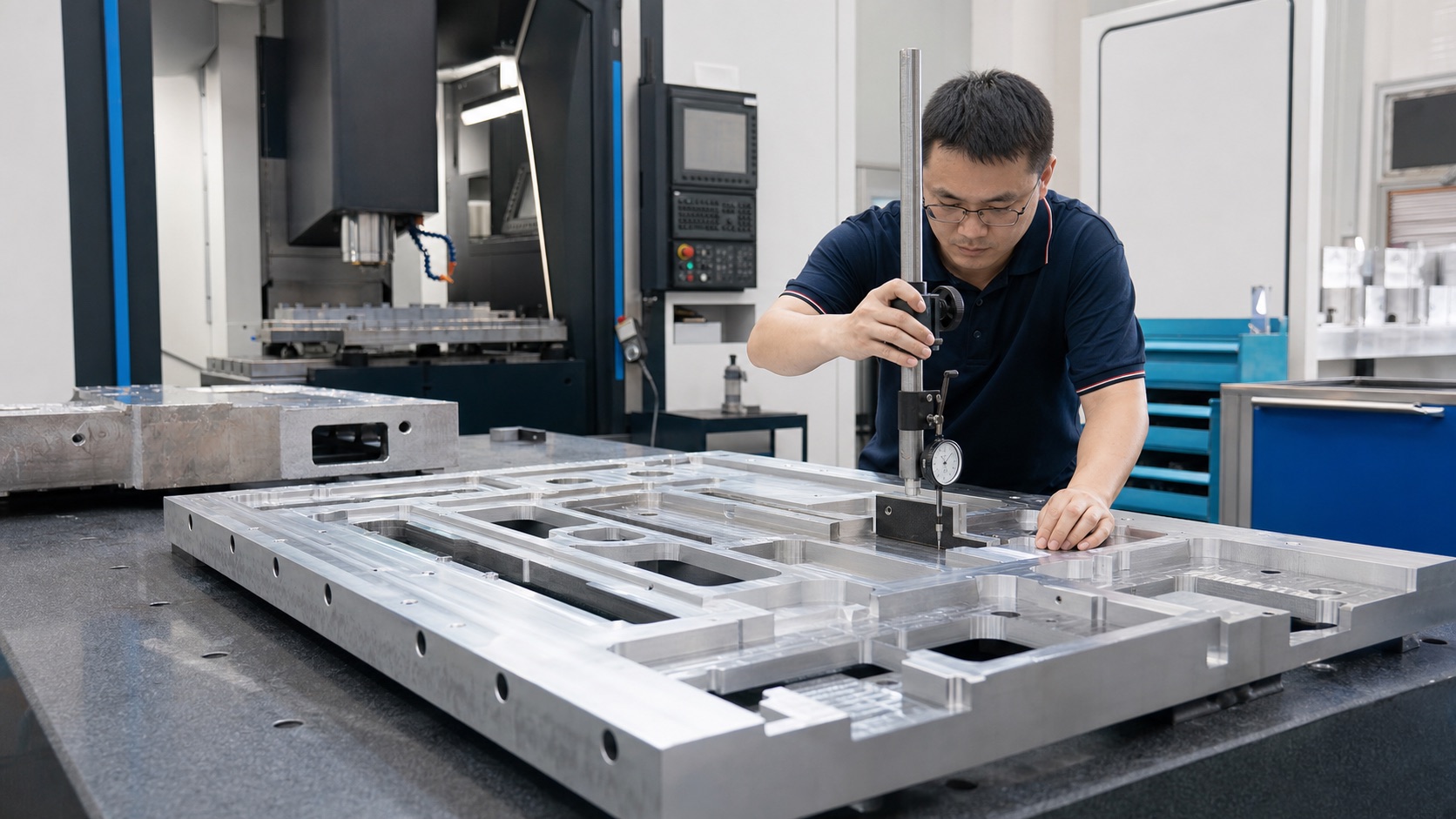
Large aluminum plates often distort after substantial material is removed from one face. Stable flatness must be planned through stock choice, allowance, cutting sequence, clamping and inspection condition.
Select stock and establish initial datums
Stock condition, thickness and rolling direction influence distortion. Establishing reference faces early provides a repeatable basis for flipping and reclamping.
Balance roughing on both sides
Avoid removing all material from one face before touching the other. Multi-stage roughing, flipping and retained finish allowance release stress more evenly.
Allow stabilization before finishing
Heavily pocketed plates may need a rest period, reclamping or a suitable stress-relief approach. Finish the mounting face and locating holes only after the plate stabilizes.
Measure with a defined support condition
Flatness depends on how the part is supported. Granite-table checks should define support points, temperature, stabilization time and measurement grid for repeatable results.