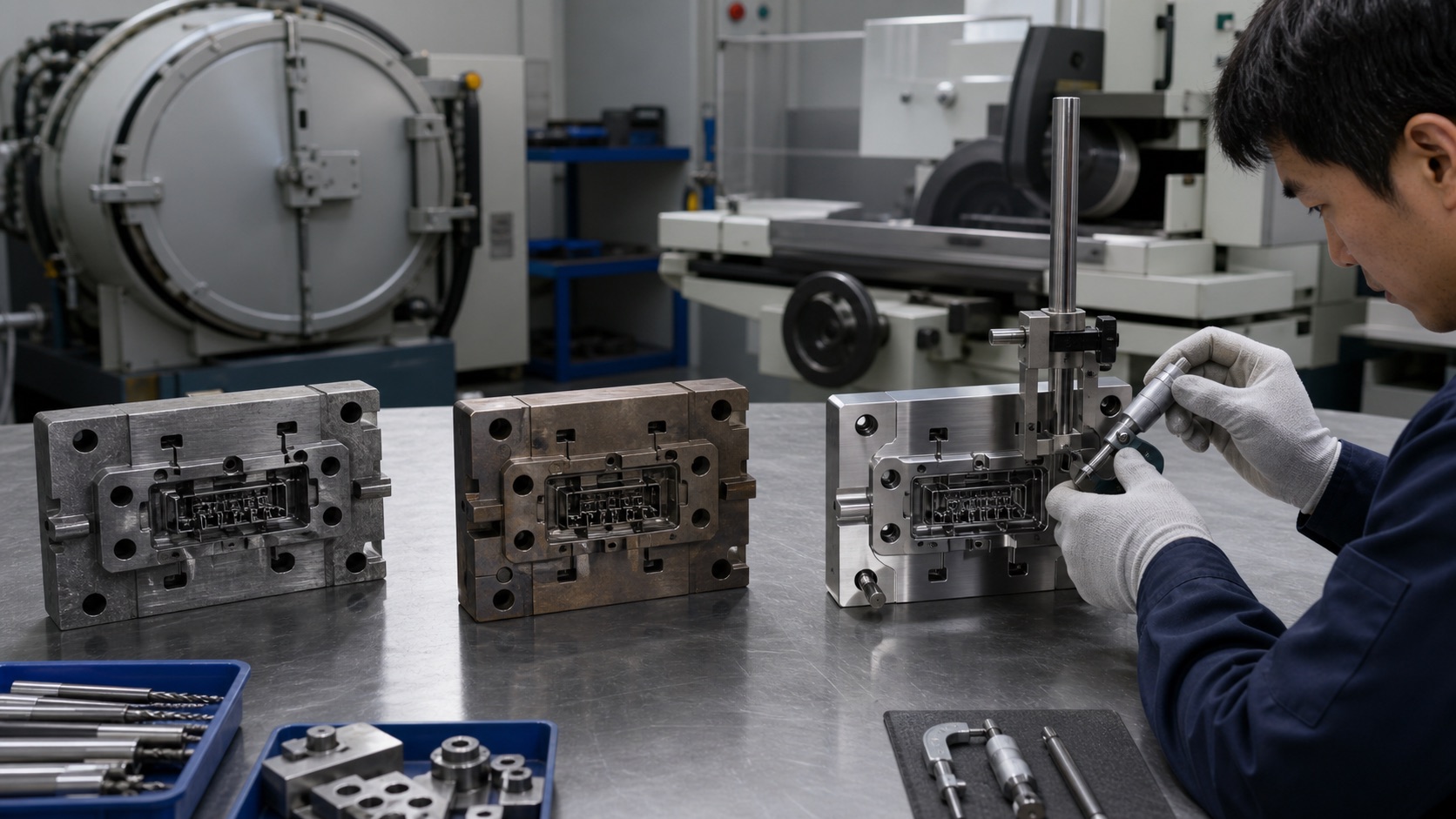
A hardened insert is not just a finished insert sent to a furnace. Material removal, section changes and heat treatment can release or introduce stress. The drawing should identify the final hardness, datums and functional surfaces so the supplier can reserve appropriate stock and select which features are completed before or after hardening.
Start from the final condition on the drawing
Define steel grade, target hardness, surface treatment, datum structure, cavity finish and fit requirements. Identify thin walls, deep slots, sharp section changes and long slender cores because they respond differently during hardening. The heat treater also needs the actual insert geometry, not only a generic material name.
Rough-machine symmetrically and relieve stress where needed
Remove heavy stock in balanced steps and avoid finishing one side while the opposite side remains solid. For distortion-sensitive parts, a stress-relief operation after rough machining can reduce movement during later work. Leave holes, threads and sharp details in a condition that will not create cracking or prevent proper cleaning before heat treatment.
Reserve stock according to geometry and process
There is no single grinding allowance for every insert. Required stock depends on size, steel, hardness route, heat-treatment control, expected distortion and the finishing method. Functional faces may need grind stock, while complex cavity details may be finished by hard milling or EDM. Agree the allowance with both the toolmaker and heat-treatment supplier before rough machining.
Recover datums before finishing the cavity
After hardening, inspect flatness and dimensional movement, then re-establish primary datums before grinding fits or finishing cavity geometry. Complete grinding, wire EDM, sinker EDM and polishing in an order that protects critical edges. Vietlink Precision can supply inspection records for the finished insert; final mold fitting should confirm shutoff contact, insert height and molded-part dimensions.