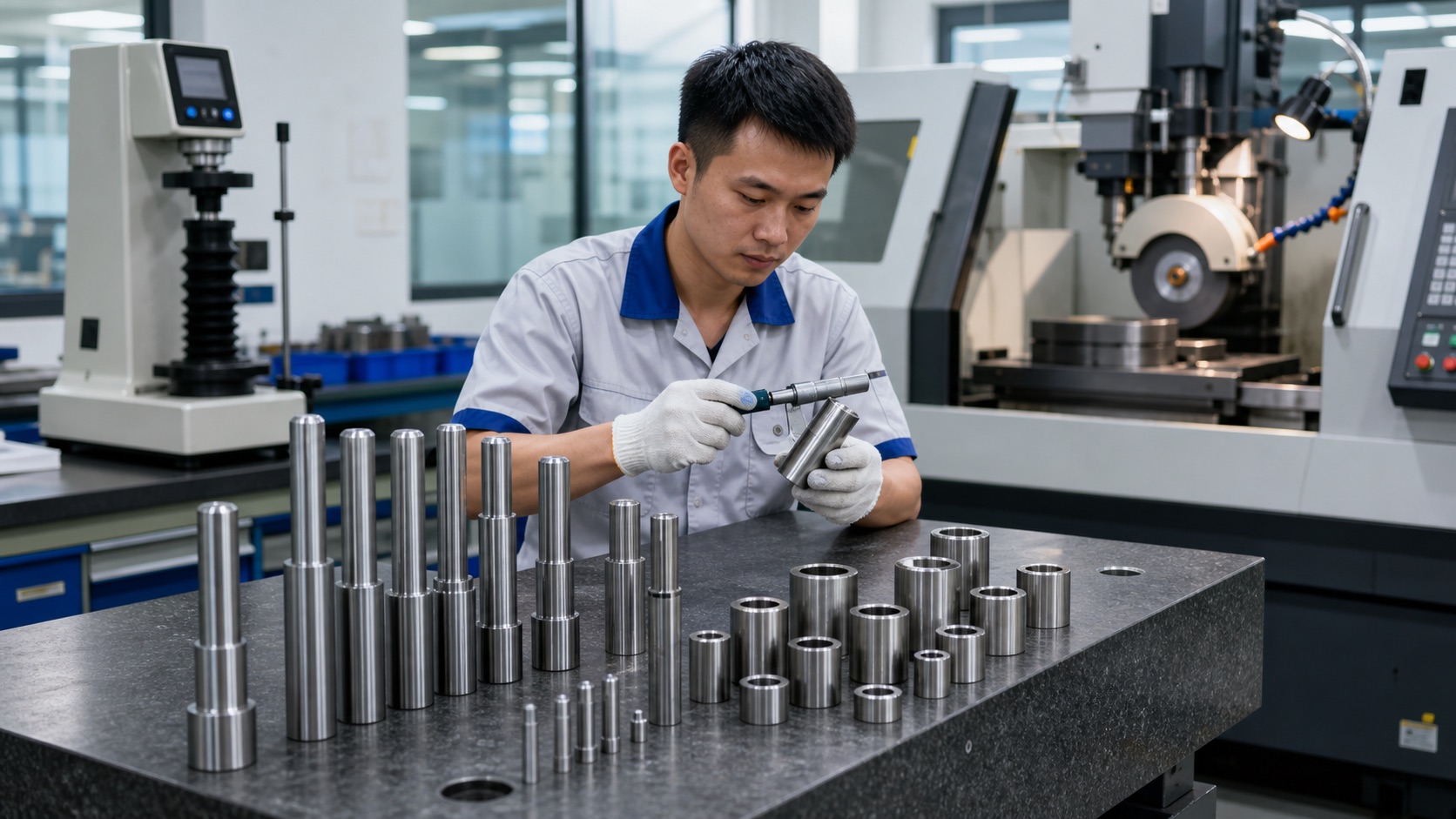
When aluminum or soft-steel holes act directly as datums, gradual wear shifts the product position. Hardened pins and replaceable bushings turn the wear zone into a measurable service component.
Choose pin style from the constrained degrees of freedom
One round pin and one relieved or diamond pin can prevent over-constraint as hole spacing varies. Shoulder, engagement length and load direction should match how the workpiece is placed.
Separate retention fit from working fit
The bushing outside diameter may press into the fixture body while its bore creates a clearance or precision fit with the pin. Both interfaces need separate drawing callouts.
Heat treat before grinding the final size
Wear pins are commonly rough-turned, heat treated and then cylindrically ground. This sequence controls hardness, roundness and final diameter better than heat treatment after finish machining.
Define wear limits and keep service spares
Play, measured diameter, surface damage and master results determine replacement timing. Spare bushings, pins and shims should have controlled IDs, drawings and inspection records.