Searches such as CNC aluminum machining, stainless steel CNC machining and precision mechanical CNC parts usually come from buyers who already have drawings or samples. The key decisions are material, functional tolerance, surface finish and inspection method.
1. Aluminum CNC machining is efficient but surface control matters
Aluminum is suitable for locating plates, housings, fixtures, lightweight machine parts and anodized components. Tool marks, clamping deformation, anodizing surface requirements and flatness of assembly faces should be reviewed early.
2. Stainless steel and steel require stronger process control
Stainless steel and steel cut differently from aluminum. Tool selection, cutting speed, cooling and clamping strategy are important to reduce burrs, tool wear and dimensional variation.
3. Precision parts need functional tolerance definition
Buyers should separate reference dimensions from dimensions that affect assembly. Locating holes, datum faces, assembly grooves, pin positions and contact surfaces should be marked clearly for focused process control.
4. Quality control should happen during the process
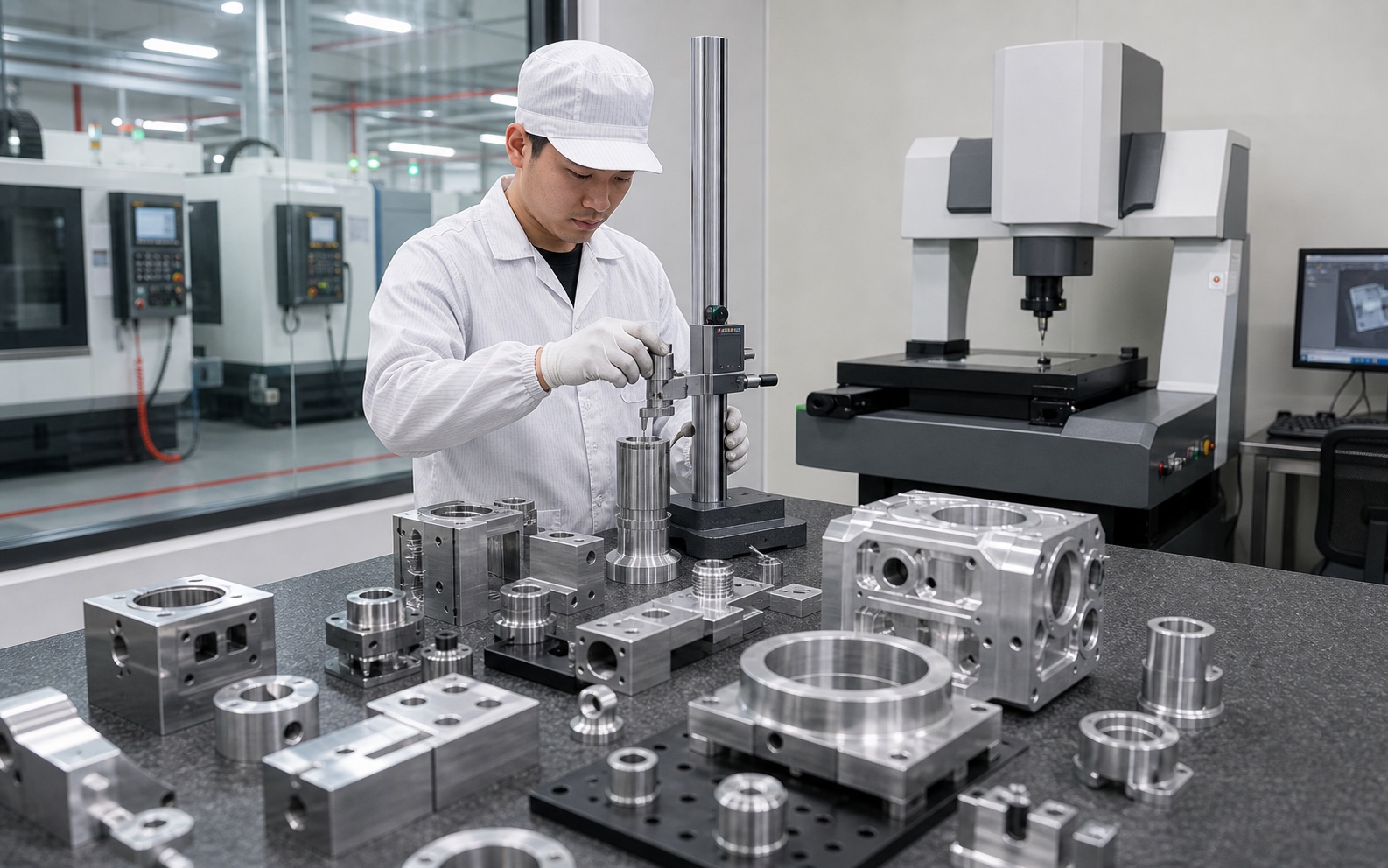
Precision parts should be checked at several stages: incoming material, rough machining, critical dimensions after finishing and final inspection before shipment. 2D measuring equipment, height gauges and checking gauges improve batch reliability.
5. When a dedicated fixture is needed
Thin parts, parts with multiple datums, repeated inspection features or deformation risk often need a dedicated fixture. For connector, 3C and BMS products, fixtures also improve position checking and assembly speed.