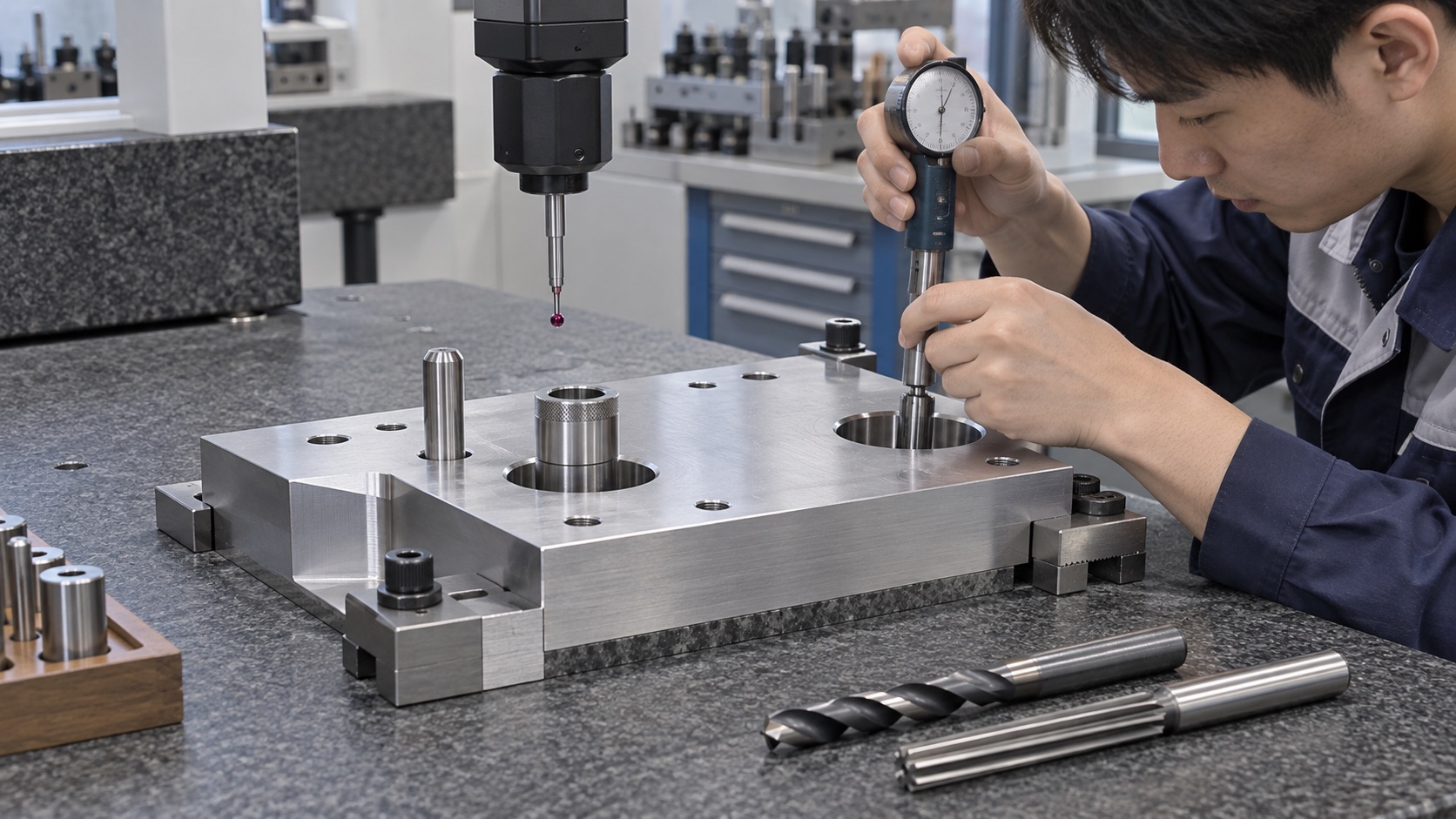
A dowel hole can meet its diameter tolerance and still make a fixture difficult to assemble or inaccurate after a plate change. Hole position, datum sequence, surface condition and the role of the second locator must be planned together. The objective is repeatable workpiece location, not simply the tightest possible pin fit.
Define what each locator controls
Use one round pin to establish position in two axes and a relieved or diamond pin to control rotation without overconstraining the center distance. State which plate owns the datum and which hole receives the removable pin or bushing. Mounting screws should provide clamping after the locators have seated, not become accidental locating features.
Choose the finishing route from the tolerance
Drilling normally prepares the hole; boring can correct location and reaming can produce the final size and finish. The exact sequence depends on plate material, hole depth, heat treatment and whether a hardened bushing will be installed. Leave enough stock for the location-correcting operation, and finish critical holes from the same datum setup whenever practical.
Inspect the assembled function, not diameter alone
Check bore size, roundness and true position to the specified datums, then assemble the actual pins and plate. Repeat removal, cleaning and reinstallation while measuring a functional gauge point. Vietlink Precision can machine fixture plates, hardened bushings and matching pins, with an inspection record tied to the customer's workpiece datum.