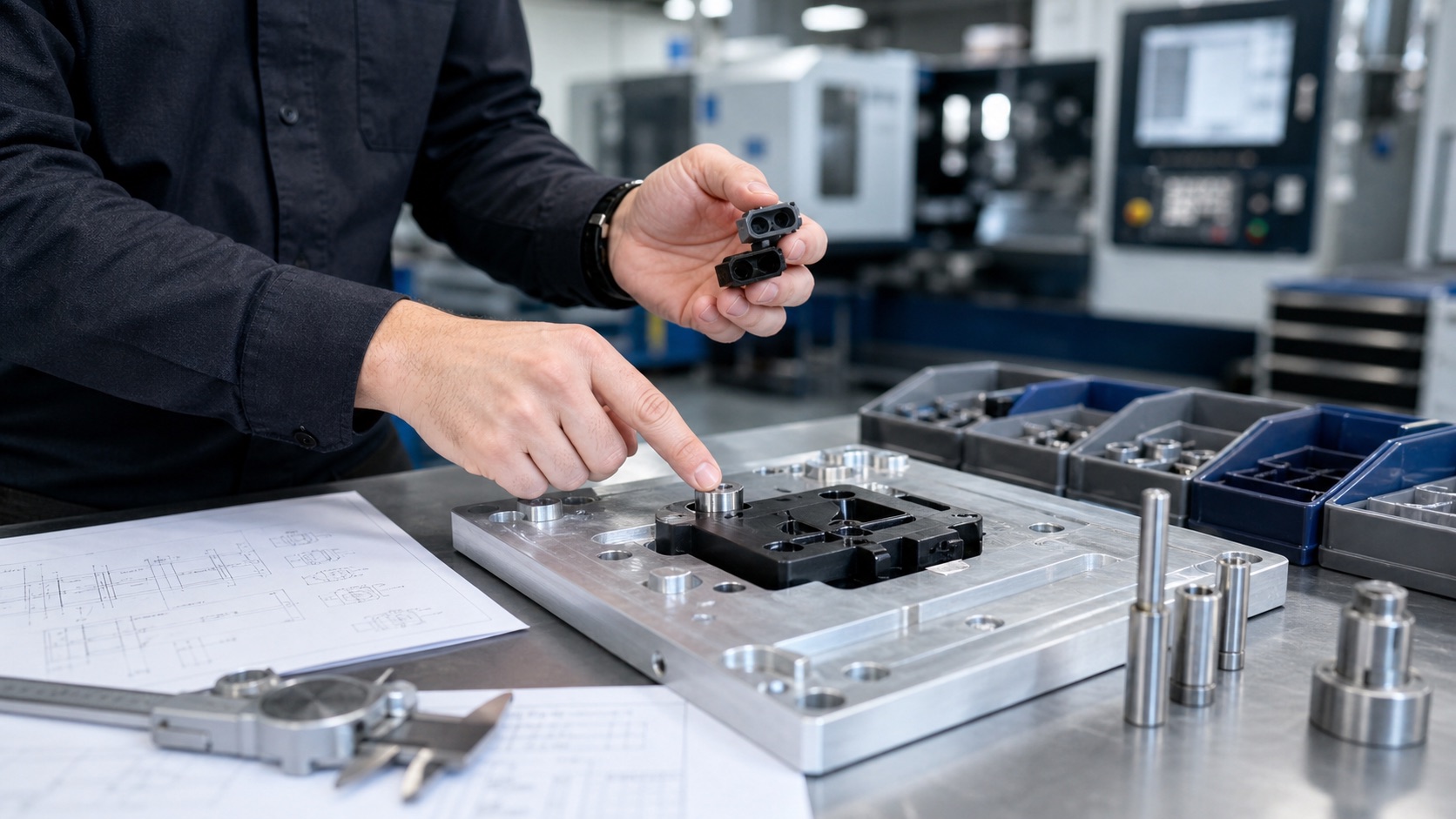
A small change to a plastic rib, locating hole or terminal height can make an existing connector fixture unsuitable. Without clear revision control, production may use the wrong fixture or sample version.
Compare old and new samples first
Place the old sample, new sample and drawing together to identify which functional dimensions changed. Do not modify tooling by eye only; a small rib or shoulder on the connector may affect stops, clearance or clamp force.
Modify the insert or remake the module
If the change is local, updating an insert or engineering-plastic nest can be faster and more economical. If the datum system, clamp stroke or base rigidity changes, remaking the module or plate may be safer.
Use revision marks to avoid mix-ups
Each modification should have a revision code, date, sample photo and inspection result. Old and new fixtures should be stored separately so the production team does not load the wrong version during a shift.
Re-validate with real parts
After modification, run real samples through the fixture and check location, clamp force, removal and measurement results. First-article records for the new revision help future maintenance.