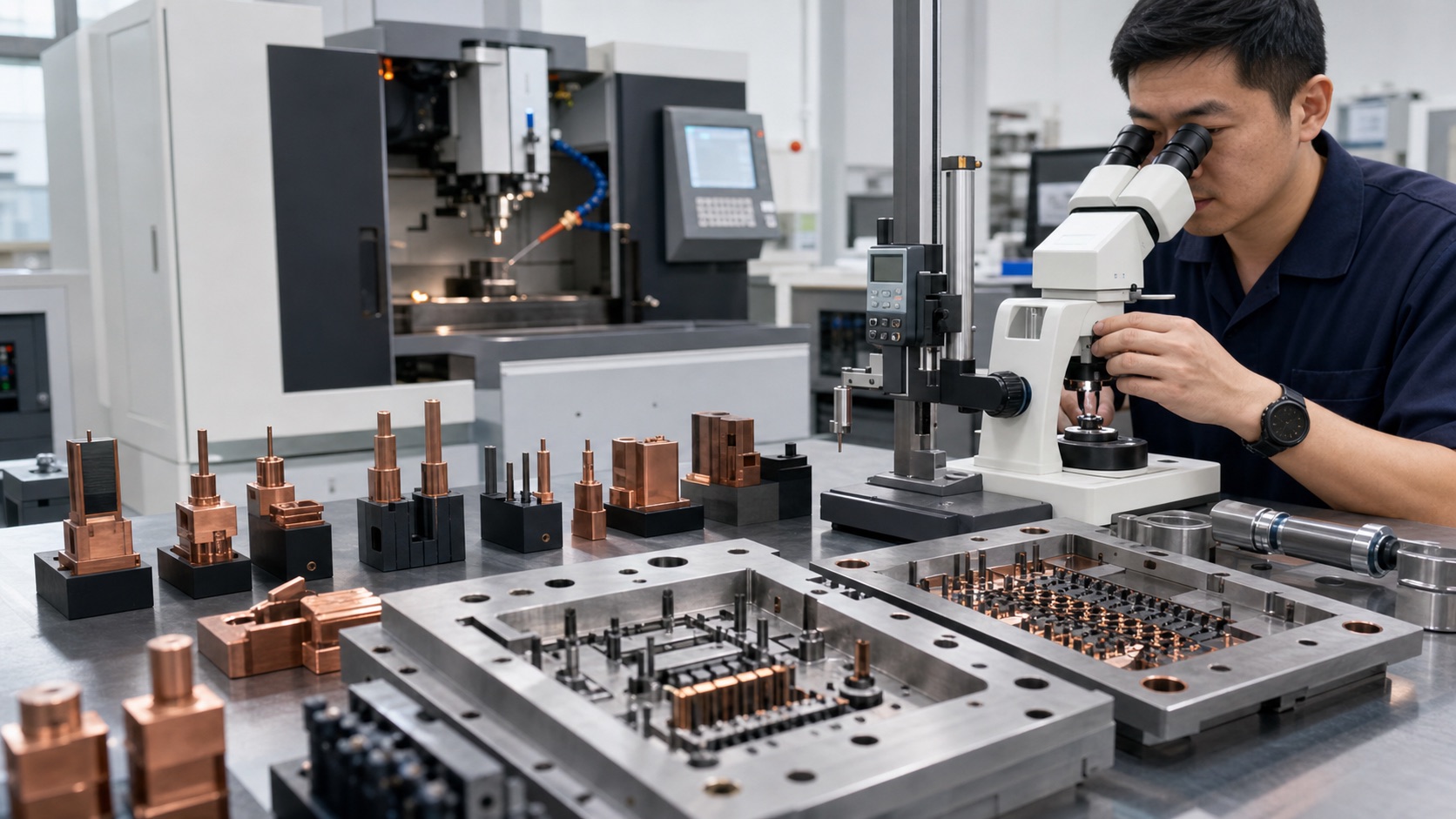
Connector housings often include thin ribs, deep terminal slots or internal corners that milling cutters cannot reach. A correctly designed electrode creates these details without forcing very small cutters beyond a stable operating range.
Identify features that are poor milling candidates
Sharp internal corners, narrow deep slots and small positive ribs are limited by cutter diameter and reach. Separating these features during drawing review makes the EDM route clear before mold machining starts.
Choose copper or graphite
Copper suits small electrodes that need a smooth finish and clear edges. Graphite machines efficiently for larger forms, but dust, edge strength and wear must be managed.
Control the spark gap
Electrode dimensions require consistent roughing and finishing gap compensation. Incorrect compensation can make a terminal slot too wide or too narrow even when the electrode shape appears correct.
Inspect the electrode and the insert
Electrode profile, location and depth are checked before burning. After EDM, functional insert features and surface condition are verified before mold assembly and trial.