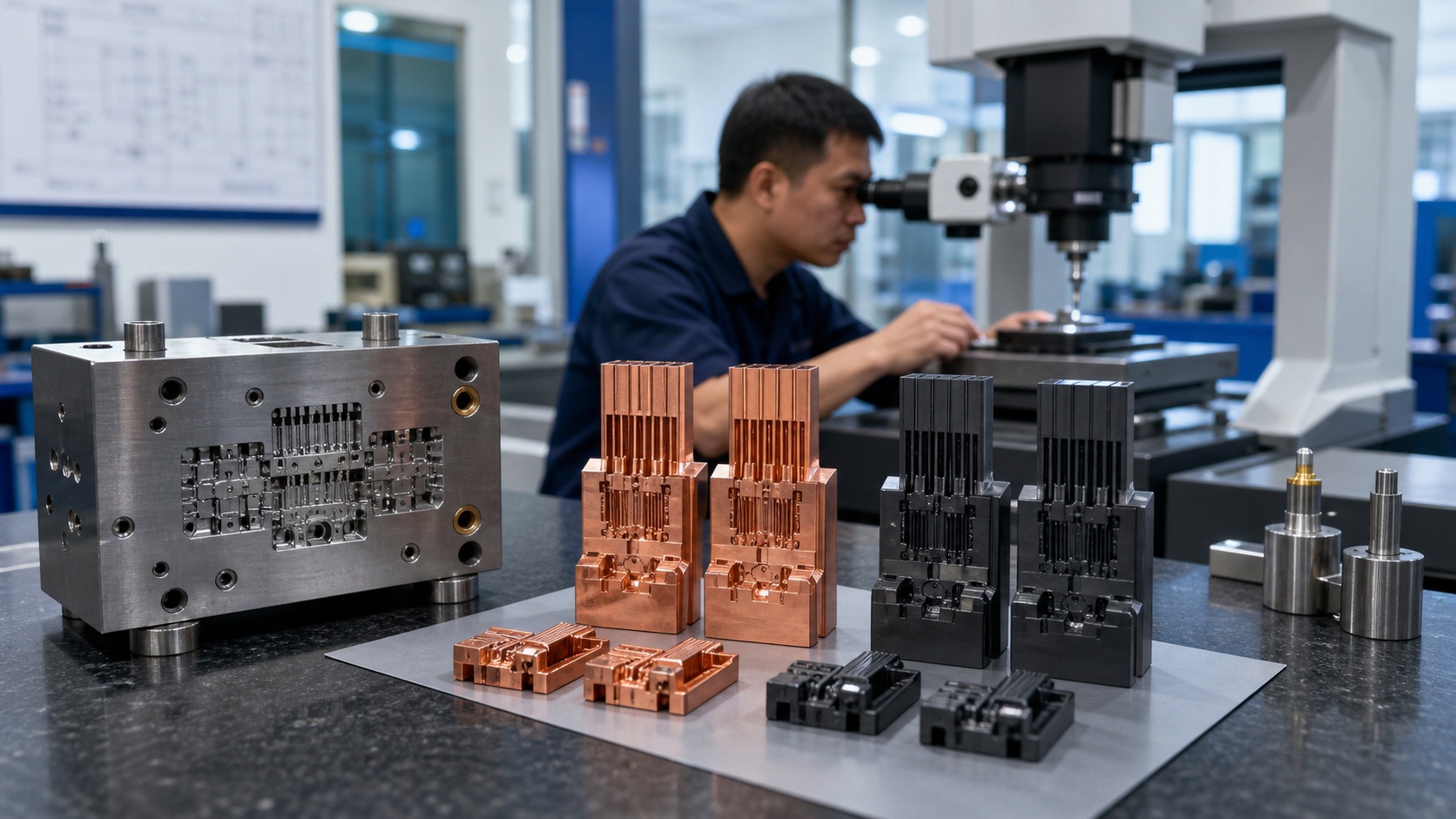
No electrode material is best for every cavity. Fine ribs, deep pockets, finish, electrode quantity, machining speed and cleanliness determine whether copper, graphite or a combination is appropriate.
Compare geometry and required finish
Copper can hold edges and fine finish for many small details; graphite is light and efficient for larger or deeper removal. Material grade and EDM settings matter as much as the general material name.
Separate roughing and finishing electrodes when needed
A roughing electrode prioritizes removal rate, while a finishing electrode preserves corners and surface quality. Thin ribs may be divided across electrodes to reduce breakage and simplify inspection.
Manage datums, holders and wear compensation
Electrodes need repeatable datums, identification and offset records. Measurement before use and tracking burn count prevent operation beyond the wear limit.
Control dust, burrs and cavity cleanliness
Graphite machining needs dust extraction; copper needs fine-burr and deformation control. After EDM, clean dielectric residue and inspect surface, size, corners and no-overburn zones.