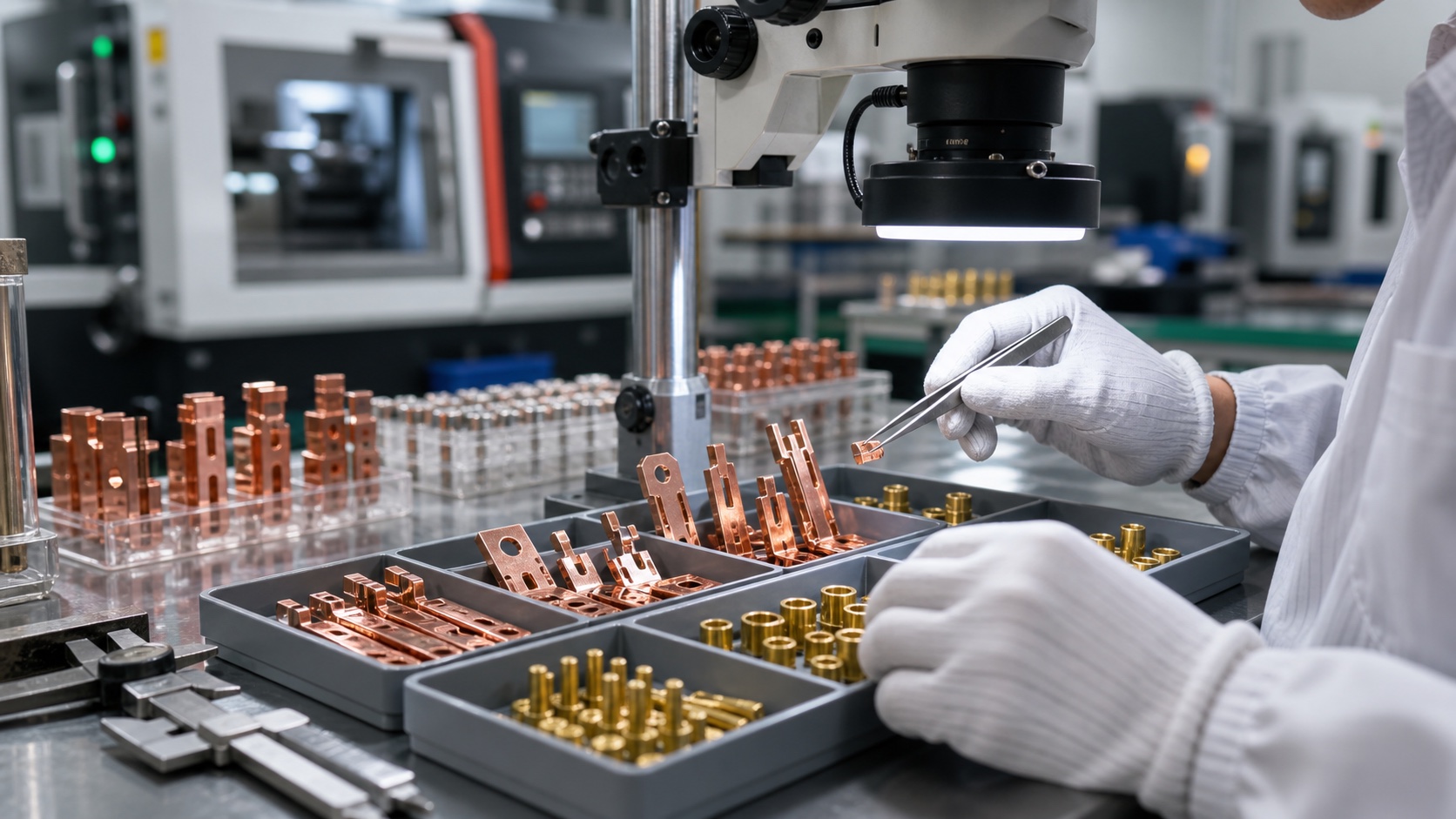
Copper and brass connector parts need electrical performance, clean edges and plating-ready surfaces. If burrs and tool marks are not controlled early, post-machining work can become expensive.
Small burrs can still disturb assembly
Hole edges, slots and electrical contact areas should be checked after milling, drilling or tapping. For small parts, cutting tools, machining sequence and deburring strategy should be considered before quotation.
Soft conductive materials need stable clamping
Copper and brass can load cutting tools and deform under excessive clamping force. Fixtures should support the correct surfaces, apply consistent force and use sharp tooling for clean finishes.
Inspection before plating reduces downstream risk
Before plating, inspect edges, flatness, threads, contact dimensions and scratches. Sensitive parts should be packed separately to avoid dents or damaged corners.
How Vietlink Precision can support
We machine copper, brass, aluminum and stainless steel connector components, fixtures and automation parts. Projects can start from prototypes, small batches or regular production.