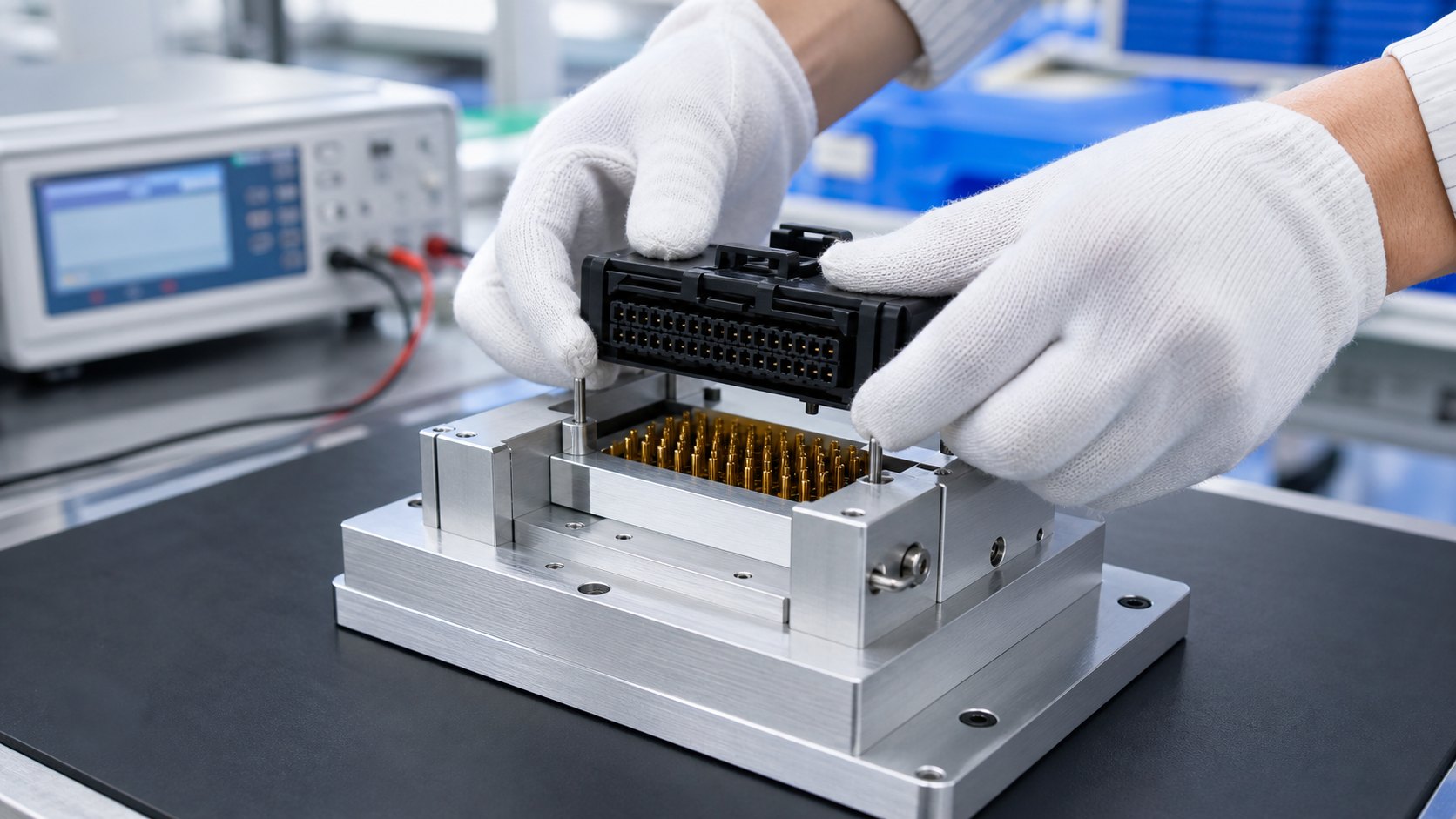
False failures often come from the fixture rather than the connector. Reliable testing starts with controlled datum location, probe travel, contact force, wiring and replaceable wear parts.
Locate the connector before probes touch
Housing datums and foolproof orientation should seat the connector without forcing terminals. Guide pins and nests absorb lateral load so spring probes move only on their designed axis.
Set working travel and contact force
Probe selection must consider pitch, current, tip style and contamination. Mechanical stops prevent over-compression while the working position stays within the recommended travel.
Control wiring and channel traceability
Short strain-relieved wiring and clear channel mapping simplify debugging. High-current circuits may need dedicated power probes, while low-level signals need stable contact resistance.
Design maintenance into the fixture
Probe plates, nests and high-wear guides should be replaceable without rebuilding the base. A master sample and scheduled resistance check separate product defects from fixture wear.