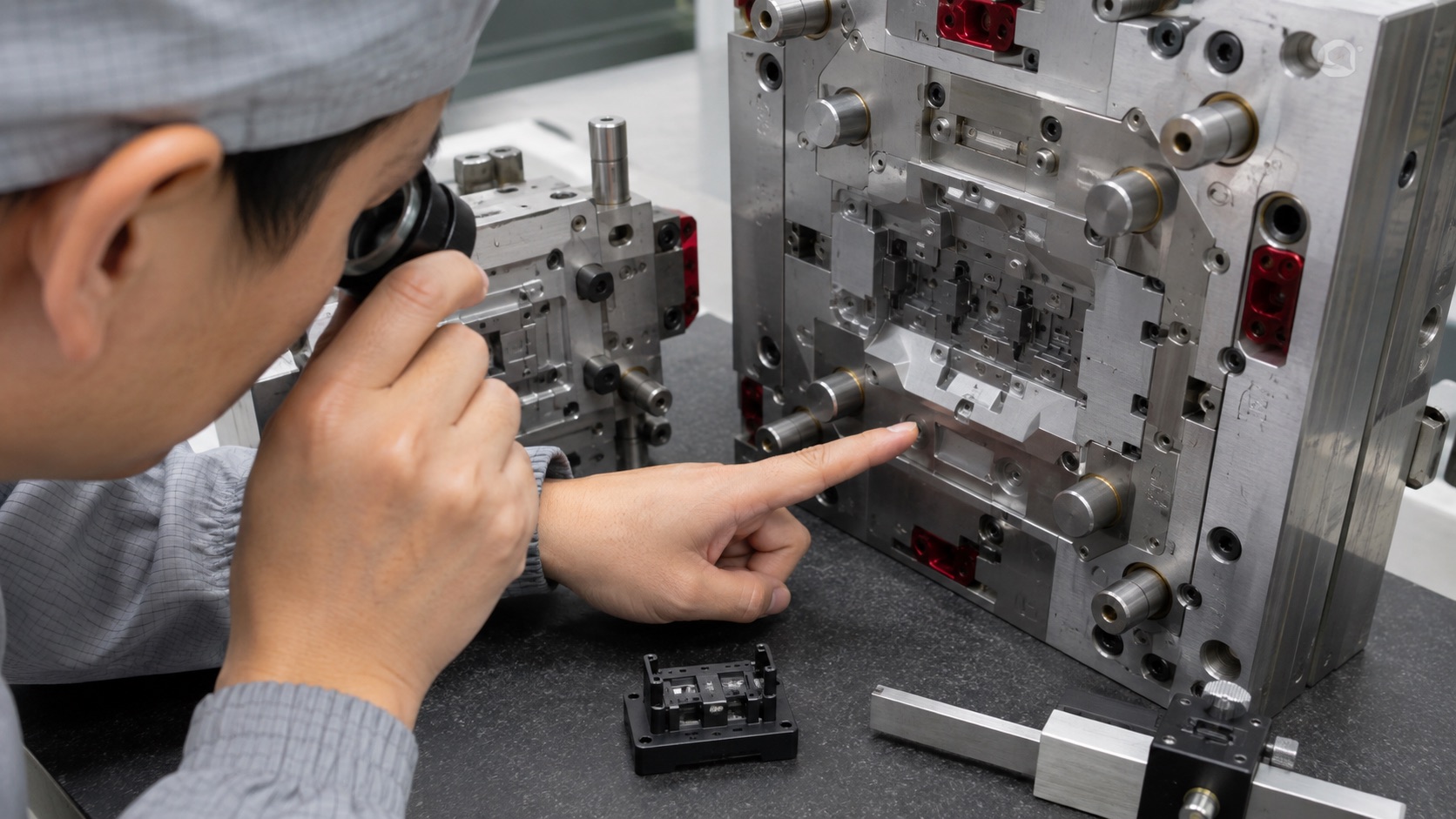
A connector housing may fill correctly yet deform during release. Ejector marks are often treated as a cosmetic issue, but uneven force can also change terminal alignment, latch engagement and sealing geometry. The ejector layout should therefore be reviewed together with wall thickness, draft, core retention and the customer's functional zones.
Confirm where the molded part will stay
Before placing pins, determine which core retains the part after opening and where shrinkage creates the highest drag. Deep ribs, small terminal windows, textured walls and insufficient draft can make one area hold more tightly. A layout that ignores this load path may eject one side first and twist the housing even when the total pin area appears adequate.
Spread force across supported plastic
Place ejectors behind ribs, bosses or other areas that can transfer load without punching through the wall. Several balanced contacts are usually more controllable than one highly loaded small pin. Keep critical sealing faces, terminal cavities and visible customer surfaces free of unnecessary marks, and provide enough steel around every pin bore for wear resistance and maintenance.
Review appearance, function and service access together
Show proposed pin and gate positions during design review, especially when the drawing limits marks. Confirm that pins can be removed, ground and replaced without dismantling unrelated mold sections. Where appearance is critical, a sleeve, blade or stripper solution may distribute force better, but it must still suit the available space and expected production volume.
Validate the ejection window during mold trials
Record mold temperature, cooling time, ejector stroke and speed when inspecting the first parts. Mark the exact cavity and pin associated with whitening, drag or deformation, then change one condition at a time. Vietlink Precision can machine, EDM, grind and fit ejector-related mold components; final acceptance should use dimensionally stable parts produced within the approved molding window.