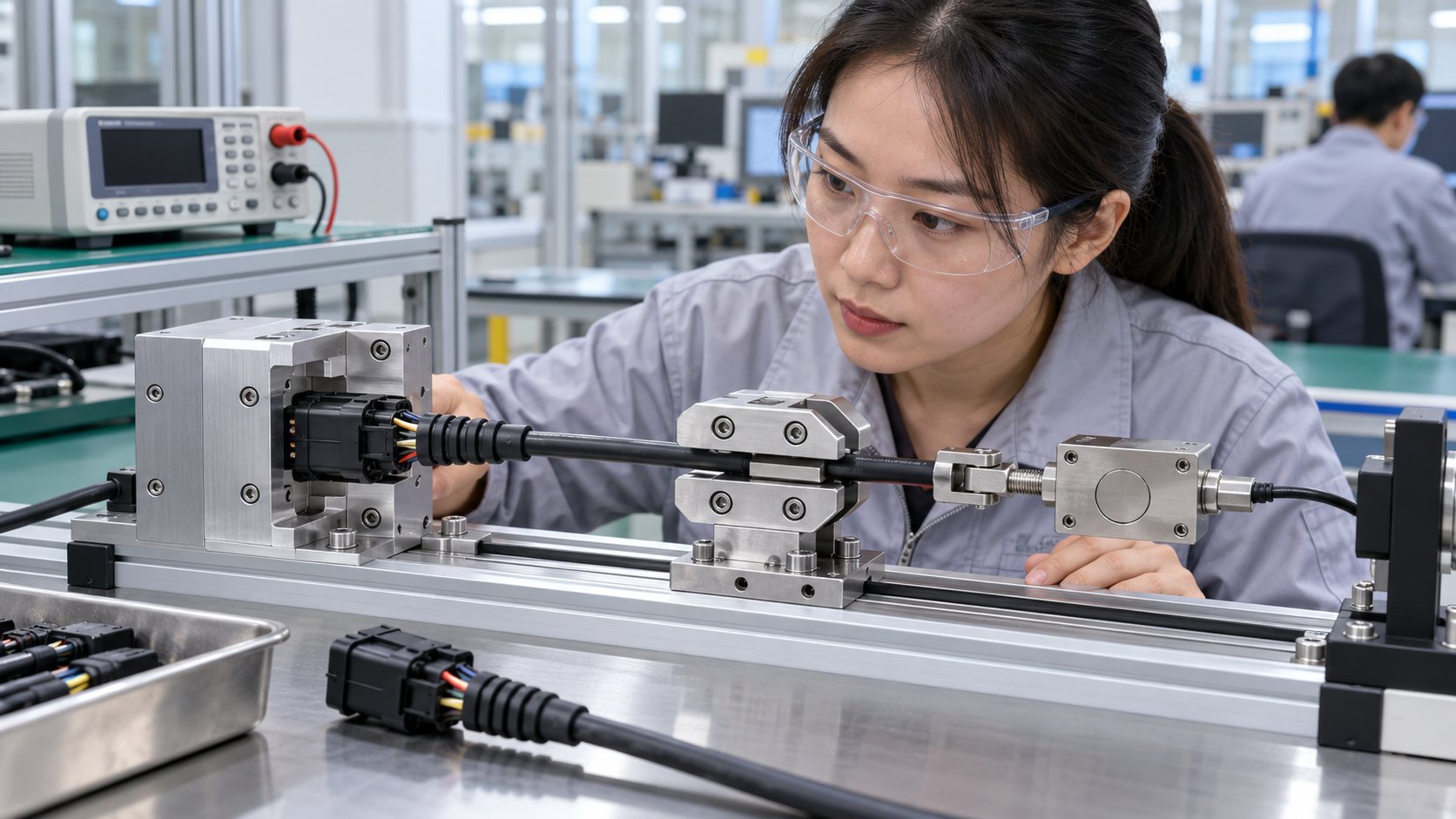
A pull-test graph can look convincing even when the cable slips through the jaws or the fixture loads the latch instead of the intended housing surface. Define what is being tested before designing the nest. Strain relief, terminal retention and connector mating strength are different load paths.
Choose the specimen and the product-specific test
Identify the connector, cable diameter and jacket, overmold or backshell, and the approved mechanical test. State pull direction, rate, load or travel limit, dwell and acceptance criteria from the applicable product specification. For a bend test, define bend location, radius, angle, applied load and cycles separately. Values from one connector family's test sheet are examples, not universal requirements for another cable.
Make the fixture load the intended interface
Locate the housing on a CNC-machined nest with defined support and clearance for delicate latches. Keep the cable and load-cell axis aligned for an axial test. Use replaceable jaws shaped for the cable jacket, with enough grip to avoid slip without cutting or crushing the sample. Mark the grip location and control exposed cable length. A bending fixture also needs a repeatable pivot and the specified radius.
Observe movement and electrical behavior together
Check fixture seating and grip slip with reference marks or a suitable observation method. Record where the failure occurs: jacket movement, boot separation, conductor or terminal damage, housing fracture or fixture release. Where required, monitor continuity or resistance during the test; a test only before and after loading can miss a temporary interruption. Define the instrument's detection capability before relying on it.
Agree which checks accompany the machined tooling
Provide the connector and cable drawings, samples, product test requirements, machine mounting and load-cell interfaces, quantity and material needs. Specify whether the order includes the nest and jaws, a bend mechanism or a complete validated station. Agree sample-run responsibility and records. Machining a fixture does not by itself certify a cable assembly, but a clear fixture specification makes the customer's test easier to reproduce.