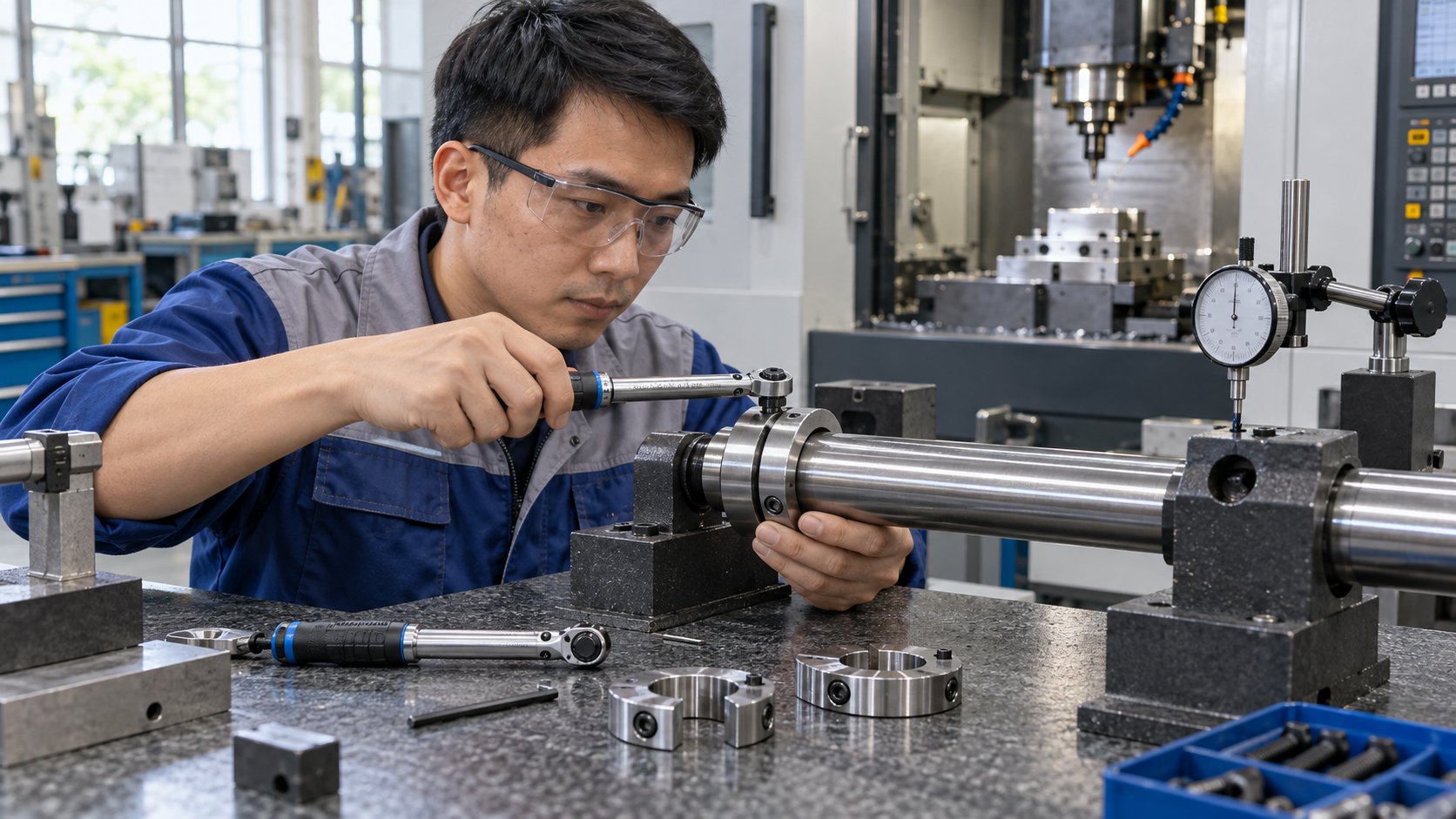
A split collar is useful when an axial stop must be fitted without removing the shaft. But a collar that feels tight can still slip or tilt. Shaft size, paired-half geometry, screw condition and the load path determine whether the assembly works.
Describe the stop and the shaft it must grip
State whether the collar positions a bearing, limits travel or locates a component during changeover. Specify actual shaft limits, material, surface, temperature and expected axial loads, including shock. Standard collars may already meet the requirement; a custom part is justified by space, face features or a special interface. A shaft collar should not be assigned an unverified coupling torque rating just because it clamps a shaft.
Keep the halves paired through machining and inspection
Define how the bore is finished with the halves held and how the split gap is established. Locate screws and counterbores so they pull the halves evenly, with sufficient engagement and no unintended bottoming. Relate the locating face to the bore and mark matched halves. Coating can alter fit and screw friction, so describe the acceptance state. Swapping apparently identical halves can change bore geometry.
Check the assembly at the approved tightening condition
Use the specified shaft or a qualified master, approved screws and the defined lubrication condition. Tighten in the agreed sequence and inspect seating, gaps and face runout. Validate holding against the required load with a suitable test. Screw torque alone is not a direct measurement of axial holding capacity. Do not compensate for an oversized bore by increasing torque beyond the approved condition.
Quote a complete interface and an acceptance method
Send the collar drawing, shaft limits, mating-face requirements, material, finish, screws, quantity and installation access. Identify whether halves must remain paired and which loaded test is required. Include sample-shaft responsibility and replacement criteria for wear. Vietlink Precision can review the machining request against these details; final load limits need the approved design and application verification, not a generic collar diameter table.