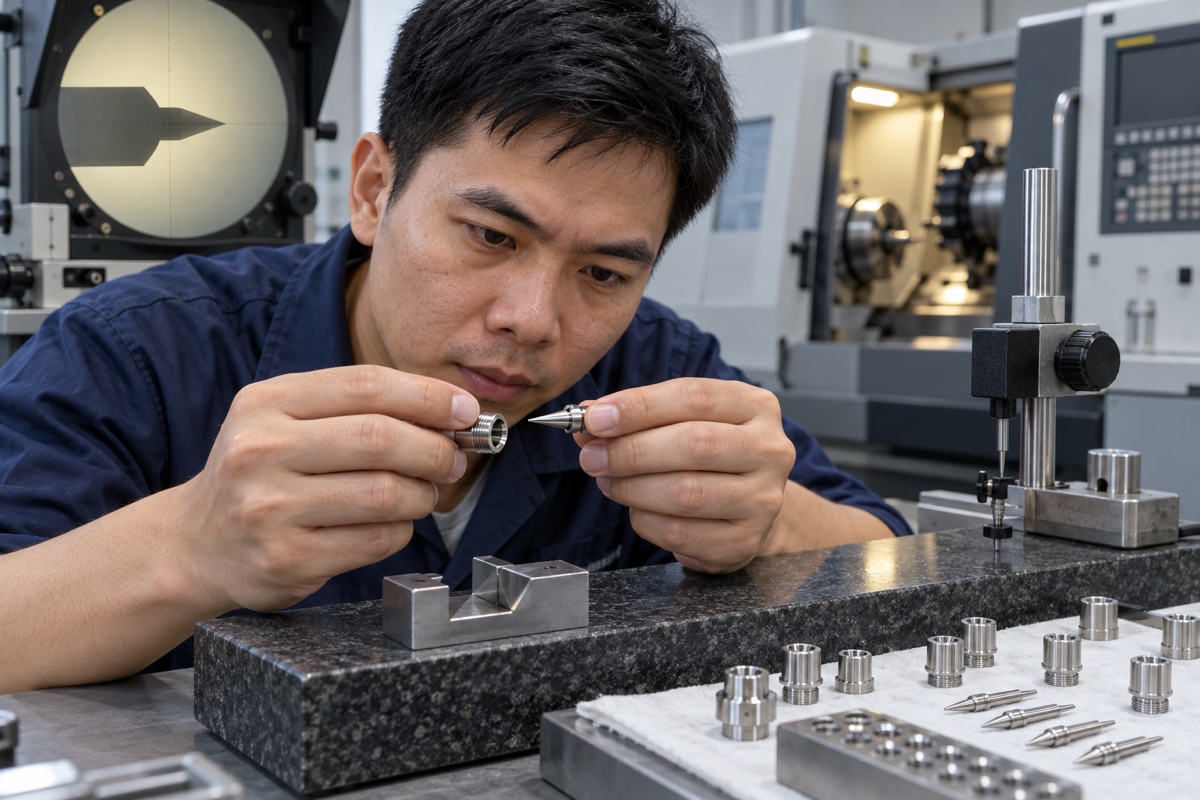
A needle-valve seat can pass bore-size inspection yet leak if the seating cone is off-axis, scratched or contaminated. The mating needle and agreed pressure test determine the functional result.
Define the mating geometry
Provide the needle angle, seat profile, port bore, fluid, pressure and any seal material. Identify the sealing line and datum bore on the drawing; a generic hole tolerance is insufficient.
Plan machining and cleanliness
Keep the seat profile concentric with the guide bore using a suitable setup. Avoid raised burrs at intersecting passages, tool marks across the sealing line and abrasive residue after finishing.
Separate part inspection from leak proof
Measure profile, concentricity and surface condition using agreed instruments. Assemble with the actual needle and seals, then perform the customer's pressure/flow/leak test if in scope. Do not call a bare metal part leak-tight.
Quote with test limits
Send Vietlink Precision STEP/drawing, steel grade, mating needle, fluid compatibility, quantity, finish and acceptance pressure. Clarify whether the order includes only machined seats or assembled test.