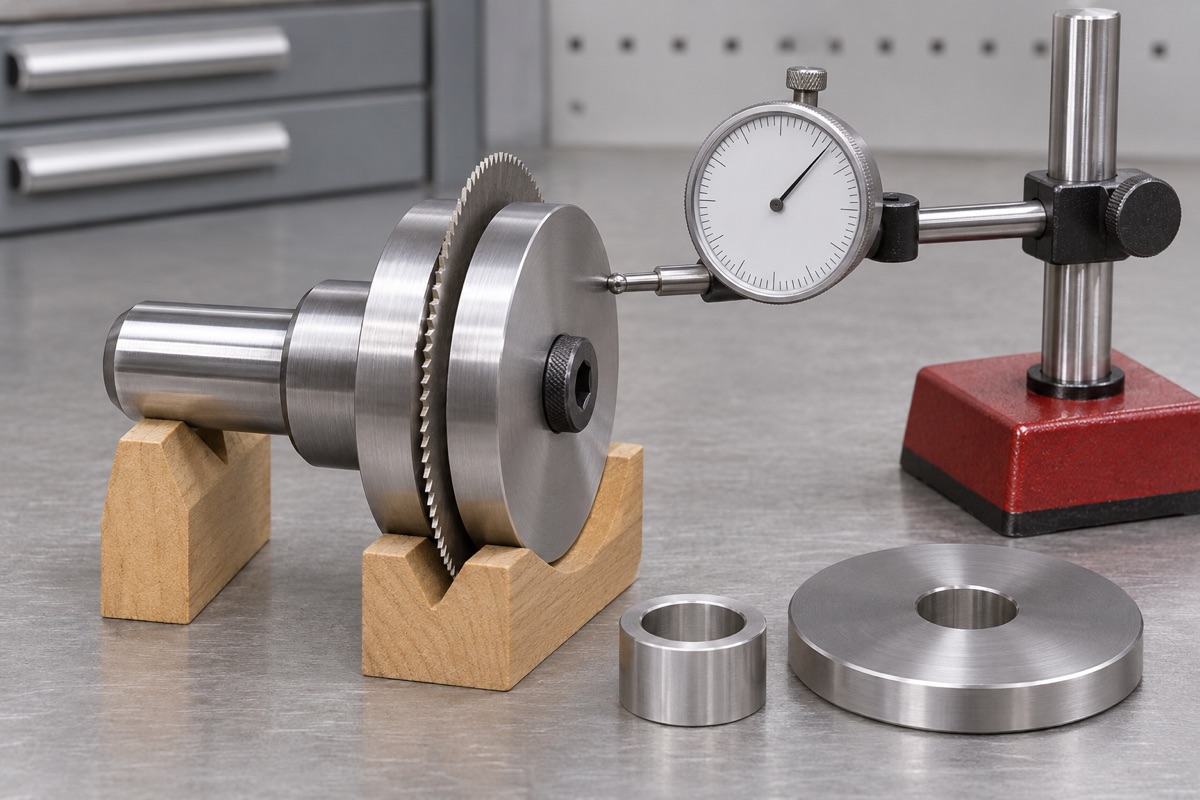
Moving the same thin slitting saw to a different arbor can change the slot it produces. Pilot fit, clamping faces and trapped debris can introduce lateral motion. These checks concern machine-tool slitting saws, not adaptations of handheld or woodworking circular saws.
Draw the complete cutting envelope
Alongside shank diameter, state cutter bore, outside diameter, thickness, required cutting depth, flange diameter and reach. A larger flange supports more of the disk but reduces available radial depth and may meet the workholding. Select arbor material, heat treatment and finishing allowances from the approved design rather than copying appearance.
A tight screw may not be clamping the cutter
With the setup stopped, inspect the pilot, opposed faces and spacers for debris, burrs and dents. Check for a screw bottoming in its thread or a cap contacting a shoulder before the cutter is held. Do not compensate for an incorrect stack by adding torque; use the fastening requirements for the actual tooling assembly.
Measure the bare arbor and assembled stack separately
Check the pilot and fixed flange face relative to the specified datum, then repeat with an acceptable cutter, spacers and cap fitted. Record measurement radius and assembly condition. A near-center reading cannot stand for outer-disk wobble. Qualified staff should make static measurements at the designated non-cutting surface under the equipment stop procedure.
Make a trial slot last
Once geometry and clamping pass, trial representative material on suitable guarded equipment within the tooling supplier's speed and feed limits. Inspect width and finish at the entrance, near depth and after deburring rather than accepting one caliper reading. Send Vietlink Precision the cutter and holder interfaces, slot drawing and quantity to review the arbor, flange and spacer machining scope.