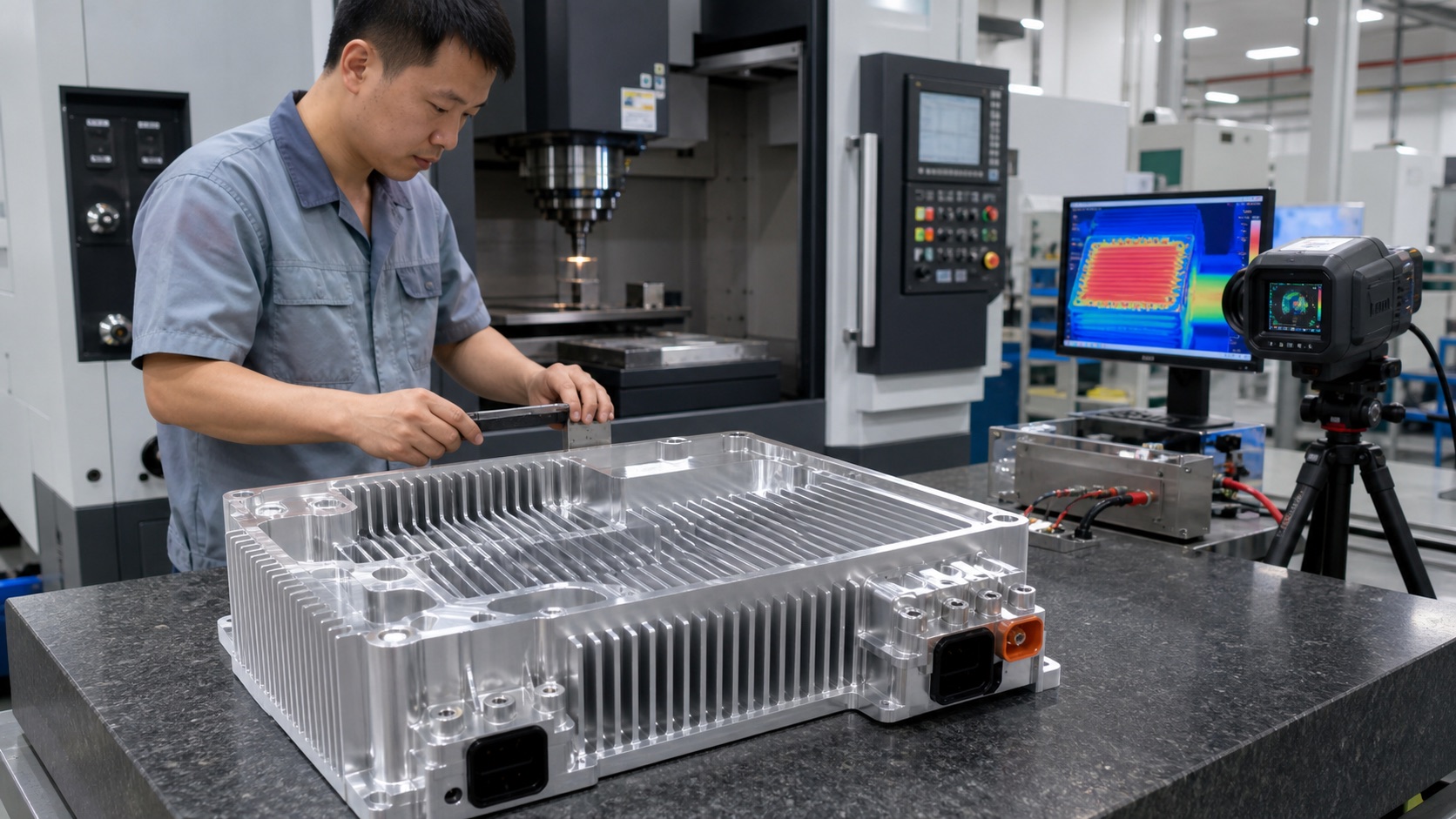
A heat-sink housing needs more than many fins. Thermal-interface flatness, fin geometry, connector location and anodizing all affect heat transfer and assembly reliability.
Select the alloy from thermal and structural needs
6061 aluminum offers machinability and stability for many housings. Mechanical load, corrosion, conductivity and finishing requirements should be defined before stock is selected.
Machine thin fins without chatter or distortion
Sharp tools, stable toolpaths and effective chip evacuation preserve fin spacing. Balanced cutting and temporary support can reduce vibration in tall fins and thin walls.
Prioritize the thermal face and connector datums
The module interface needs specified flatness and roughness, while connector holes must follow functional datums to avoid assembly stress. Inspect these features before surface finishing.
Verify after anodizing and thermal testing
Anodizing changes bores and contact areas unless they are masked. Recheck position, threads and flatness, and use representative thermal-load testing when the application requires it.