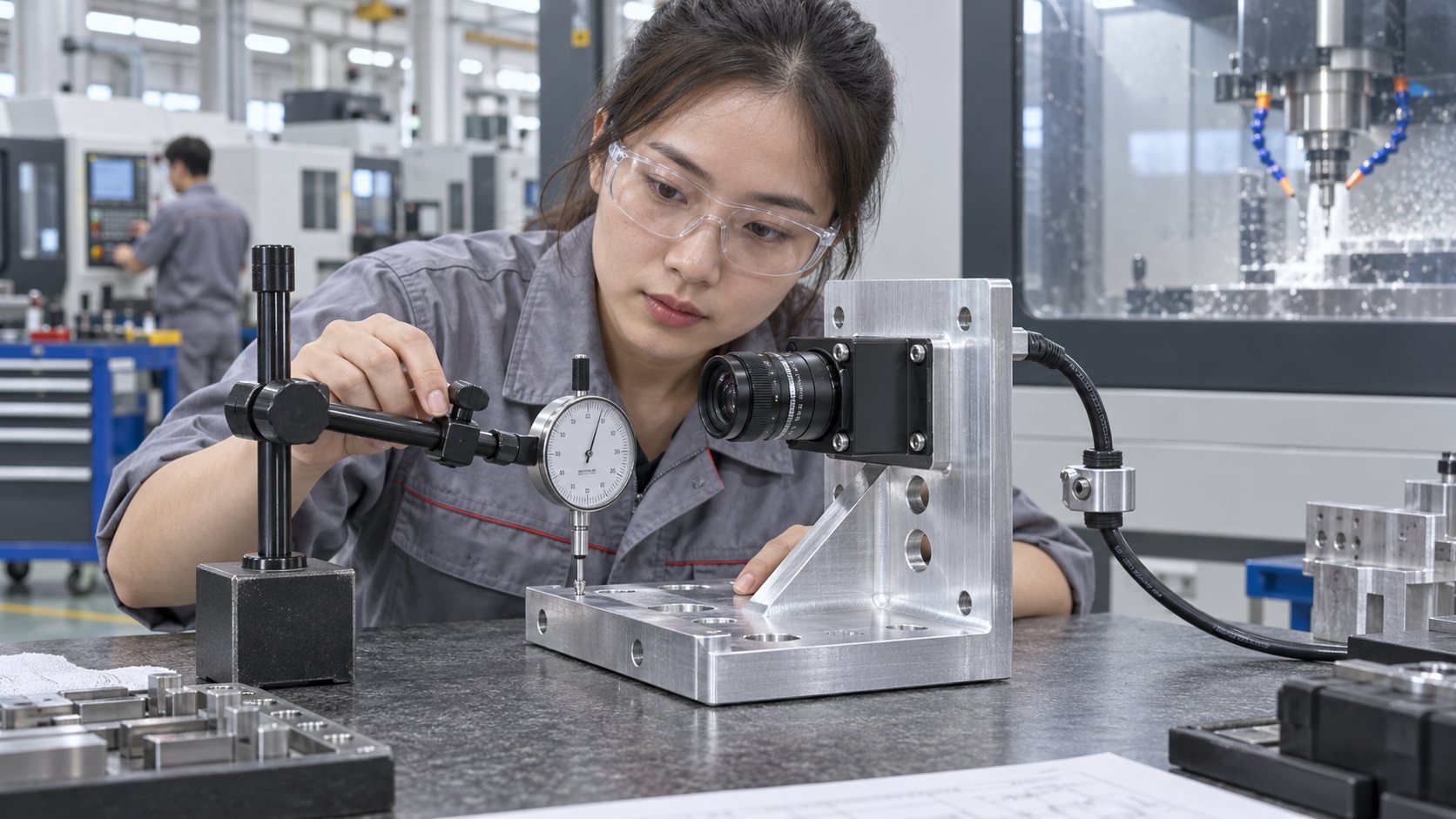
When an inspection image moves after a camera is removed and refitted, tightening the screws harder rarely solves the whole problem. A useful CNC bracket gives the camera a repeatable seat, supports the lens and separates adjustment from final locking.
Define what the bracket must locate
For connector pin inspection, label reading or presence checks, record the camera model, lens, working distance and orientation before drawing the bracket. The camera body mounting face and the lens optical axis are different references. Obtain the manufacturer's mounting drawing and avoid treating a housing edge as the optical center. Leave space to focus, adjust lighting and replace the camera without dismantling the entire station.
Use slots for adjustment and datums for replacement
An aluminum L-bracket with ribs, a locating plate and a separate lens cradle is a practical starting arrangement. Slots allow initial adjustment; a qualified seat, dowels or defined stops establish the final location. Finish related faces and locating holes from a consistent setup, remove burrs at contact edges and specify coating allowances. A heavy lens needs support without forcing the lens and camera into misalignment.
Check the complete assembly after warm-up
Route the cable through strain relief so connector tension does not pull the camera sideways. Consider heat transfer through the bracket and follow the camera's cooling guidance. Inspect face flatness, hole location and seating first, then image a stable reference target after warm-up. Repeat removal and refitting with the same screw torque. Record image position and focus changes; a dimension report alone cannot prove optical repeatability.
Send the station interface with the machining request
For quotation to Vietlink Precision in Bac Ninh, send STEP files, the bracket drawing, camera and lens drawings, installation photos, quantity and finish. Identify which faces locate the assembly and the allowed image shift after replacement. Agree on a mechanical sample check or a functional camera check before production. This keeps inspection effort focused on features that actually reduce station readjustment.