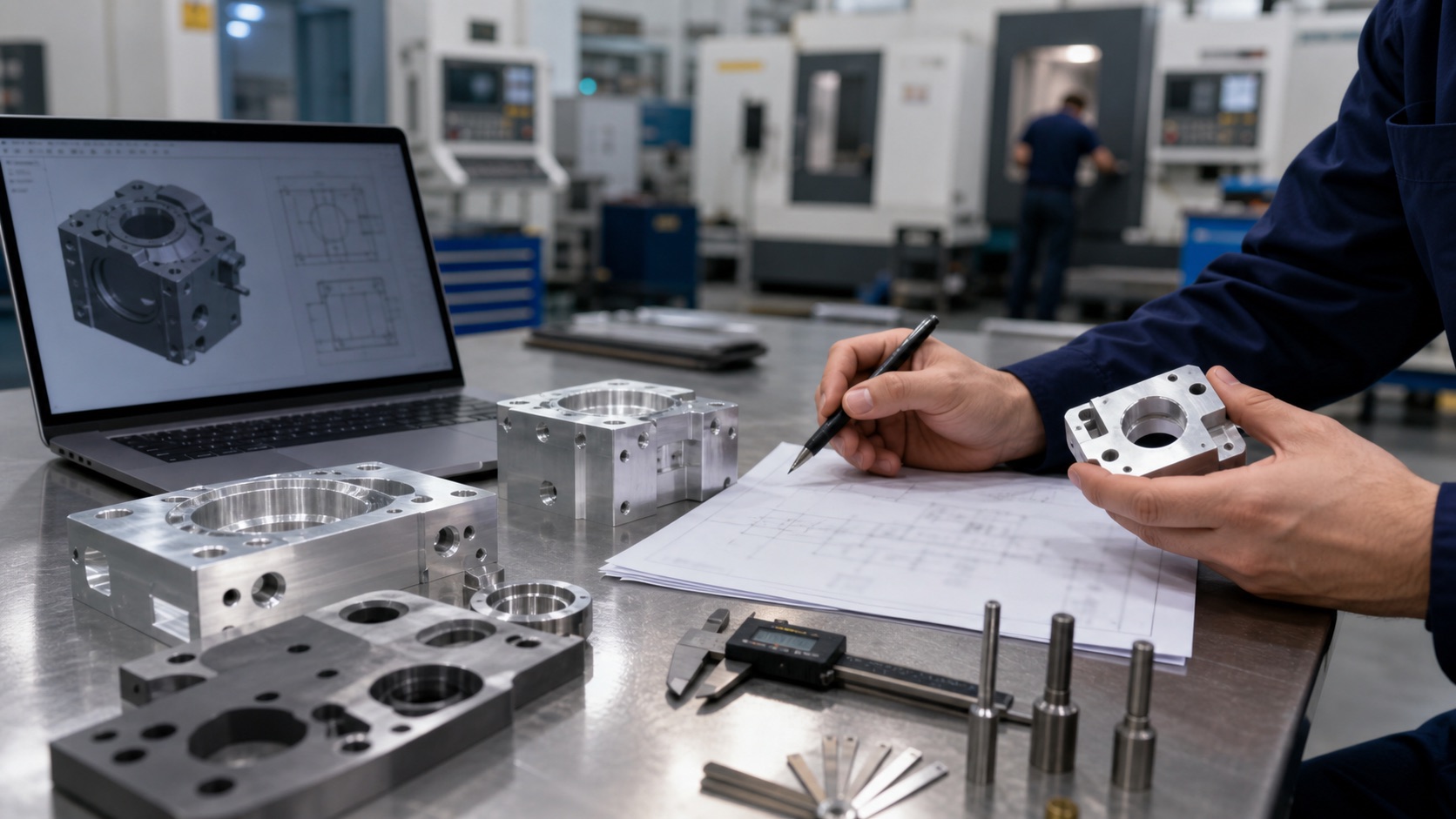
A useful CNC quotation is not only a price. Buyers need to know whether the part is manufacturable, where the risk is, which tolerances drive cost and whether a more stable process exists. DFM clarifies these points before ordering.
Send both 2D and 3D when available
A 3D file explains shape, while a 2D drawing defines tolerances, material and inspection requirements. If only one data type is available, review is still possible but communication takes longer.
Mark functional tolerances
Not every dimension needs a tight tolerance. Buyers should mark mounting holes, datum faces, sliding locations and function-critical areas so the factory controls the right points.
Define finish and post-processing early
Anodizing, plating, heat treatment, polishing and passivation can affect dimensions and surface condition. These requirements should be included during quotation.
Real samples reduce misunderstanding
For replacement parts or fixtures used with real products, physical samples or operation photos help engineers understand fit, clamping force and protected areas.