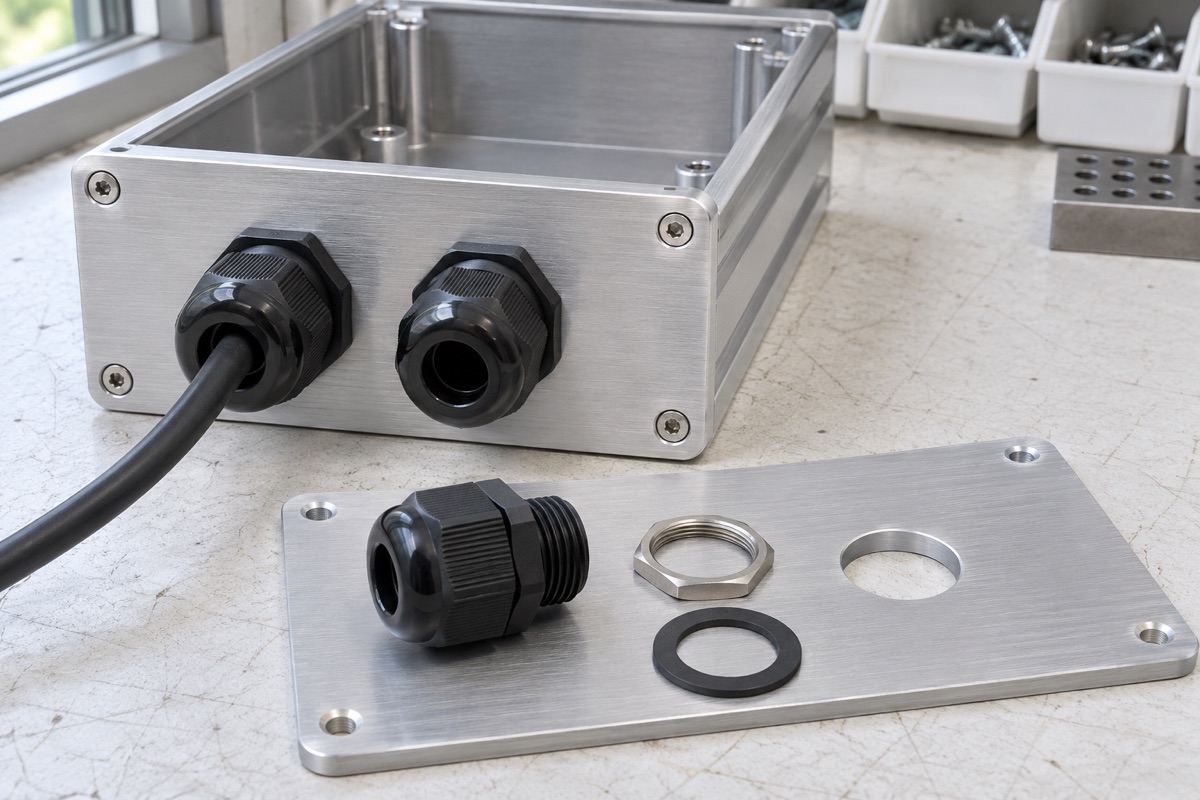
Cable outside diameter tells you whether a gland can grip that cable. It does not tell the machine shop what hole to cut. A gland marked M20 may use an approved clearance hole and locknut or a specified tapped entry. Settle the mounting method before releasing the plate drawing.
Call out the complete entry
For a through hole, use the gland's specified finished diameter, panel thickness range, seal location and rear clearance. For a tapped entry, state thread form, pitch or threads per inch and required engagement. An NPT taper thread is not interchangeable with a similarly sized parallel metric thread.
Draw the wrench before spacing the holes
Two gland bodies can clear each other while neither can be tightened. Include the widest hex, wrench swing at the wall and room to hold the rear locknut after the first cable is fitted. If the plate is too thin for the specified thread engagement, change the approved mounting arrangement.
Identify which interface has to seal
Cable-to-gland, gland-to-plate and plate-to-box are three different paths. A face washer needs an uninterrupted seat without burrs, nearby breakouts or paint ridges. A tapered threaded entry follows the selected product's engagement and sealing instructions, not a copied flat-washer detail.
Set acceptance for the item actually ordered
Inspect finished holes or threads, seating faces and tool access on a loose plate. For an ingress claim, test the specified enclosure assembly with its cables, glands and perimeter gasket under the agreed method. Send the gland code, cable diameter, plate thickness, finish and layout for quotation.